

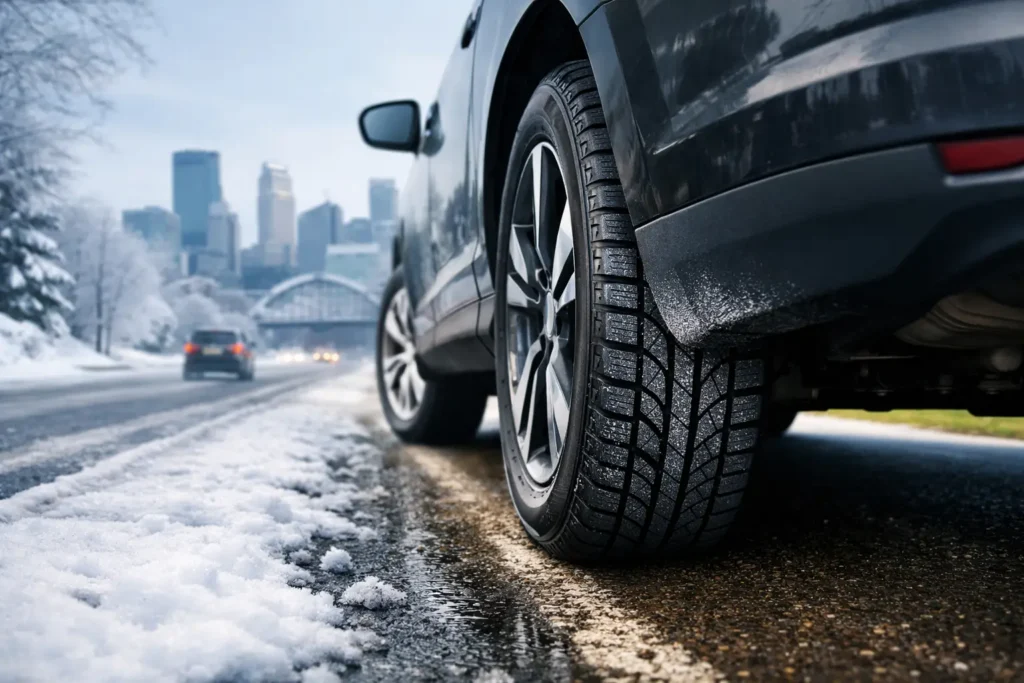
Your morning drive in Minnesota can start on dry pavement, hit slush at the next stoplight, and end in a parking lot glazed with refrozen ice. That is exactly why the best tires for Minnesota commuting are not just about brand names or price tags. They are about choosing the right tread design, rubber compound, and season setup for the roads you actually drive every day.
For most commuters, the wrong tire shows up fast. You feel it when braking at an icy intersection, when hydroplaning starts in heavy summer rain, or when the vehicle feels nervous on packed snow. If you are trying to sort out what makes sense for your car, crossover, or light truck, it helps to look past marketing language and focus on how Minnesota weather really works.
What matters most in the best tires for Minnesota commuting
A good commuting tire in Minnesota has to handle more than one season well. We get long winters, plenty of wet roads, potholes, and warm-weather highway driving too. That means tire choice is always a trade-off between winter traction, wet grip, ride comfort, tread life, and cost.
For many daily drivers, wet traction gets overlooked. It should not. A lot of accidents happen in rain, not snow, and a tire that sheds water well can make a real difference in stopping and control. This is one reason we often recommend open shoulder tire designs whenever they fit the vehicle and driver. Open shoulders help move water and slush out of the tread, which can improve both summer rain traction and winter performance. In a state with roughly five months of snow and ice, that design matters.
If you want to understand more about how tread pattern affects traction, wear, and seasonal driving, our knowledge center breaks that down in plain language at www.joesalltire.com/knowledge-center/.
The three tire paths most Minnesota commuters choose
There is no single perfect answer for every driver. The best setup depends on how far you drive, whether you can stay home in storms, and how much winter confidence you want.
All-weather tires for year-round convenience
For a lot of commuters, all-weather tires are the best middle ground. These are different from basic all-season tires. An all-weather tire is built to stay more flexible in cold temperatures and usually carries the severe snow rating, which means it is designed to perform better in winter conditions.
If you drive every day and want one set of tires left on year-round, this is often the strongest option. You get better snow traction than a typical all-season, solid wet-road performance, and less hassle than swapping tires twice a year. The trade-off is that an all-weather tire usually will not match a dedicated winter tire on ice or deep snow, and it may not last as long as a harder all-season compound.
For many Minnesota commuters, though, all-weather tires hit the sweet spot.
Winter tires for the safest cold-weather commute
If you commute early, drive long distances, or cannot choose to stay off the road during storms, winter tires are still the best answer. They are made with rubber that stays flexible in cold weather, and their tread is designed to bite into snow and ice better than year-round options.
This setup gives you the strongest braking and cornering confidence from late fall through early spring. That matters most for drivers on untreated roads, rural routes, or highways where one slick patch can change everything. The downside is cost, since you need a second set for warmer months, plus storage and seasonal changeovers.
Still, if winter driving confidence is your top priority, nothing beats a dedicated winter tire.
All-season tires for lighter winter demands
A standard all-season tire can work for some drivers, but this is where honesty matters. In Minnesota, many all-season tires are simply not the best choice for a true daily commuter unless your winter driving is limited and you can avoid the worst weather.
They tend to ride quietly and wear well, and they are often less expensive up front. But when temperatures drop hard, many all-season compounds lose some flexibility, and that can mean less grip when you need it most. If you already have all-seasons and your commute is short and mostly plowed city roads, they may be acceptable. We just would not oversell them as the ideal answer for everyone here.
Best tires for Minnesota commuting by driver type
The right recommendation changes with the person behind the wheel.
If you drive a sedan or small crossover mostly on plowed roads, an all-weather tire with an open shoulder design is often the practical choice. It gives you useful winter grip without turning your vehicle into a seasonal tire project.
If you drive a pickup or SUV and spend time on county roads, side streets, or early-morning routes before plows are out, you may be better off with either a strong all-weather tire or a dedicated winter setup. A heavier vehicle does not magically stop better on bad tires. In fact, the extra weight makes tire quality even more important.
If your commute is mostly highway miles, stability in slush and rain should be near the top of your list. That is another case where shoulder design matters. Tires that evacuate water and slush well tend to inspire a lot more confidence when road conditions change mile to mile.
If you are not sure which option fits your vehicle and driving habits, we can help you figure that out fast. Just tap the blue phone call button in the lower left corner – we’re just a call away.
What to look for besides the label
A tire can be called all-season, touring, highway, or performance, but those names only tell part of the story. What really matters is how the tire is built.
Tread pattern matters because it controls how the tire clears water, slush, and snow. For Minnesota commuting, a design with strong siping and open shoulder channels usually makes more sense than a closed, smooth-looking pattern built mostly for quiet highway cruising.
Rubber compound matters because cold pavement changes how a tire grips. A tire that feels great in October may feel much less planted in January if the compound hardens too much.
Sidewall strength matters too, especially with potholes. A comfortable ride is nice, but not if the tire is too fragile for spring road damage. There is always a balance between comfort and durability.
And then there is road noise. Some of the grippier tires are a little louder. That does not make them worse. It just means you need to decide what matters more: a quieter ride or stronger traction in bad weather. For many commuters, the safer choice is worth a little extra hum.
Price matters, but value matters more
A cheap tire that wears unevenly, struggles in rain, and feels sketchy on snow is not a bargain. On the other hand, the most expensive tire on the rack is not automatically the best fit either.
The smart buy is usually the tire that matches your real driving conditions and gets installed correctly. Proper mounting, balancing, inflation, and alignment awareness all affect how that tire performs. The best tire in the world will still disappoint if it is worn unevenly or running at the wrong pressure.
That is where a local shop can give better advice than a big chain script. At Joe’s All Tire, or as many locals know us, All Tire, the goal is to recommend what actually fits your commute, not just what happens to be easiest to sell.
When to replace commuting tires in Minnesota
A lot of drivers wait too long. If your tread is getting low, winter performance drops before the tire is technically bald. Wet braking suffers too. Cracks, age, vibration, uneven wear, and repeated low-pressure issues are all signs that it is time to take a closer look.
This is especially true going into fall. Replacing borderline tires before winter usually gives you better choices, better scheduling, and less stress than trying to fix the problem after the first storm.
If your vehicle already feels loose in rain or slips easily on light snow, your tires are telling you something.
The best tires for Minnesota commuting are the ones that fit your reality
There is no magic tire that does everything perfectly. But there is a right choice for your commute. For many drivers, that means an all-weather tire with an open shoulder design because it handles Minnesota’s mix of rain, slush, and snow better than a lot of standard options. For tougher winter routes, dedicated snow tires still lead the pack.
The main thing is to be honest about how and where you drive. If your vehicle has to get you to work no matter what the weather is doing, your tire choice should reflect that. A good recommendation should make your commute safer, more predictable, and less stressful every month of the year. That is what done-right tire advice is supposed to do.
