
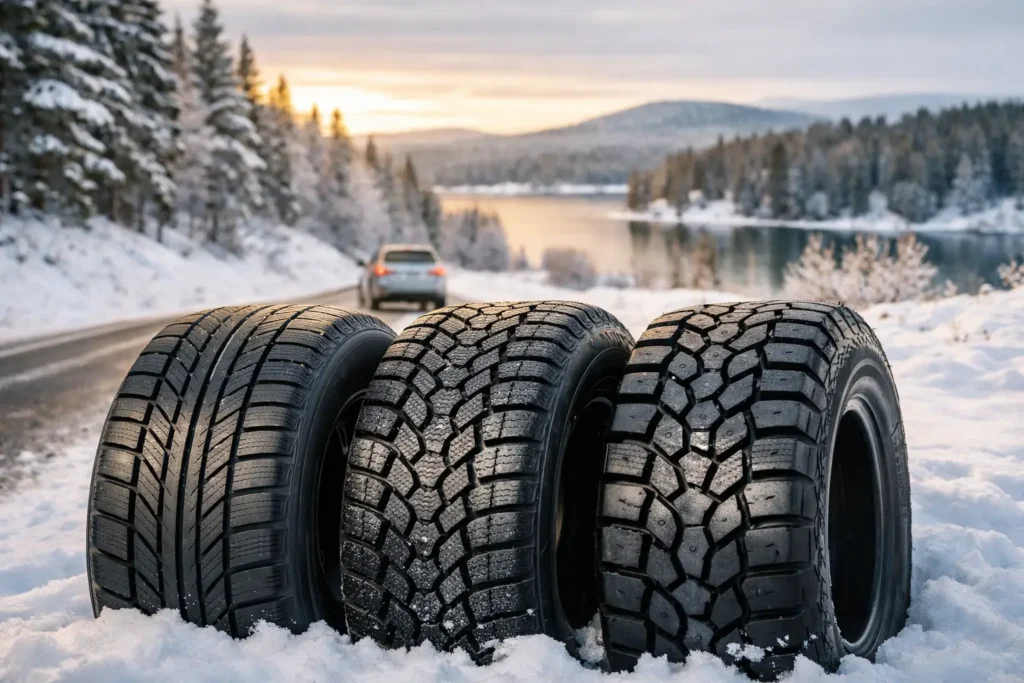
Minnesota roads can fool you. A tire that feels fine on a dry July afternoon can turn into a headache the first time you hit standing water, slush, or packed snow on your way to work. That’s why the best tire designs for Minnesota aren’t just about brand names or price tags. They’re about tread shape, shoulder design, rubber compound, and how your vehicle actually gets used here for months of cold, snow, ice, spring thaw, and heavy summer rain.
At Joe’s All Tire, locals usually just call us All Tire, and this is one of the biggest things we help people sort out. A lot of drivers come in asking for the “best tire,” but the better question is what tire design fits Minnesota weather and your driving habits without wasting your money.
What matters most in Minnesota tire design
Minnesota gives you a little of everything, and not the easy version. You’ve got long winter conditions, freeze-thaw cycles, deep slush at intersections, wet highways in spring, and hot pavement in summer. A tire design that works in a milder state may not hold up nearly as well here.
The biggest factors are siping, groove depth, tread block layout, and shoulder design. Sipes are those small cuts in the tread blocks that help create extra biting edges for snow and ice. Wider grooves help push out water and slush. The overall tread pattern determines how stable the tire feels on dry pavement and how well it clears the mess off the road when conditions turn ugly.
This is also where we give a lot of direct advice on open shoulder designs. For many cars, SUVs, and trucks in Minnesota, open shoulder tires are a smart choice because they improve evacuation of water, slush, and loose snow. That matters in winter, but it matters in summer too. Hydroplaning isn’t just a spring problem here. One hard storm on a worn or poorly designed tire can make a good vehicle feel sketchy fast.
Best tire designs for Minnesota by tread pattern
If you strip away the marketing, most drivers are really choosing between a few practical tread design categories.
Open shoulder all-weather and all-terrain styles
This is one of the best fits for Minnesota driving, especially if you want one tire that handles a wide range of conditions. Open shoulder designs have more space around the outer tread area, which helps the tire clear water and snow instead of packing it in. That can improve traction during wet summer storms and help maintain grip through winter slush.
For light trucks and SUVs, this design often gives a confident, planted feel without going all the way into an aggressive mud tire. For passenger vehicles, certain all-weather tires with open shoulder features can offer a very balanced setup for year-round use.
That said, there’s always a trade-off. Some open shoulder designs can run a little louder on the highway than a quieter touring tire. For most Minnesota drivers, the traction benefit is worth it.
Directional tread designs
Directional tires are built to rotate one way, usually in a V-shaped or arrow-like pattern. These can be very good in wet conditions because they channel water away efficiently. Some winter tires use directional patterns for exactly that reason.
The downside is flexibility. Rotation patterns are more limited, and if you’re trying to maximize tire life over time, that matters. Directional designs can be excellent, but they need to be matched with proper maintenance.
Symmetrical touring tread designs
These are common on everyday sedans and crossovers because they’re smooth, quiet, and often last a long time. For a driver who spends most of their time commuting on cleared roads, a good symmetrical touring tire may be perfectly fine.
But “fine” and “best for Minnesota” aren’t always the same thing. Some touring tire designs prioritize comfort and low rolling resistance more than wet or winter grip. If the shoulders are too closed off and the grooves are limited, you may give up traction when weather gets bad.
Aggressive mud-terrain designs
A lot of truck owners like the look of a deep, chunky mud tire. There’s no question they have a place for off-road use. But for most Minnesota drivers, especially those doing regular commuting, they’re not the best answer.
Mud tires can be noisy, wear unevenly, and feel less stable on icy pavement than people expect. More aggressive doesn’t automatically mean safer in winter. Snow, slush, ice, and wet highways all ask different things from a tire than a muddy trail does.
Why open shoulder tires make sense here
We recommend open shoulder tire designs often because Minnesota roads ask a lot from the outer edges of a tire. When you’re cornering through slush, crossing water-filled ruts, or dealing with changing road texture from one lane to the next, those shoulder areas do real work.
A more open shoulder helps release water and snow instead of trapping it. That improves traction and can help the tire stay more predictable during bad weather. It also helps in heavy summer rain, which is a point people overlook. Minnesota isn’t just a winter tire state. It’s a wet-road state too.
If you’re comparing two tires at the same price and one has a noticeably more open shoulder with stronger wet and snow performance, that’s usually worth a close look. This isn’t Walmart. The cheapest option on the rack isn’t always the option that protects your family best when conditions turn in five seconds.
If you’re trying to figure out what fits your car, truck, or SUV without overbuying, we can help you narrow it down quickly. Just tap the blue phone call button in the lower left corner – we’re just a call away.
All-season, all-weather, or winter?
This is where honest advice matters, because it depends on how and where you drive.
All-season tires
A lot of vehicles come with all-season tires from the factory. They’re made to do a little of everything, but some are much better than others. In Minnesota, a basic all-season tire can be acceptable if you drive mostly in town, stay off the road during storms, and replace them before they get too worn.
The problem is that many drivers expect too much from average all-season tread once temperatures drop hard. Rubber gets stiffer. Grip falls off. Braking distances get longer.
All-weather tires
For many everyday Minnesota drivers, this is the sweet spot. All-weather tires are designed for year-round use but have stronger winter capability than a typical all-season. Pair that with a good open shoulder layout, and you get a practical setup for people who want one tire to handle most of the year with more confidence.
They’re especially useful for commuters, families, and drivers who don’t want to switch tires seasonally but still need real winter performance.
Dedicated winter tires
If you drive a lot in early mornings, on untreated roads, or during storms, winter tires are still hard to beat. Their tread compounds stay more flexible in cold weather, and the tread designs are built to bite into snow and ice.
The trade-off is cost and storage. You’ll need a second set for the warmer months. But for some drivers, especially those with longer rural commutes or front-wheel-drive vehicles that struggle in snow, it’s money well spent.
Tread design matters more as tires wear
A new tire can hide a lot of weaknesses for a while. Once wear starts to reduce groove depth, the real quality of the tread design becomes obvious. Tires with poor water evacuation or weak shoulder design tend to lose confidence fast as they age.
That’s another reason we focus on design, not just sticker price. A tire that starts out decent but becomes poor in rain or slush halfway through its life isn’t much of a value.
Proper rotations, balancing, and alignment also make a major difference. Even the right tire design won’t perform the way it should if it’s wearing unevenly or fighting a suspension issue. When someone comes in with vibration, noise, or strange wear, we don’t guess. We look at the whole picture and give a straight answer.
Best tire designs for Minnesota drivers who want fewer surprises
For most people around here, the safest choice is usually a well-built all-weather or winter-capable tire with strong siping, wide evacuation grooves, and an open shoulder design. That combination gives you better odds in the conditions Minnesota throws at you most often – slush, wet pavement, loose snow, and sudden weather changes.
There are exceptions. Some drivers care more about long highway comfort. Some need extra load capacity for a truck or trailer. Some are better off with a dedicated winter setup. But the basic rule holds up: look for a tread design that clears water and snow well, stays stable in mixed conditions, and doesn’t sacrifice safety just to promise a quiet ride or a lower price.
If you want to learn more about tread patterns and seasonal tire choices, Joe’s All Tire also shares practical information in our knowledge center at www.joesalltire.com/knowledge-center/.
A good tire decision should leave you feeling more confident, not more confused. When the roads are wet, icy, or covered in slush, the right tread design shows up where it counts – in how your vehicle stops, turns, and gets you home without drama.