

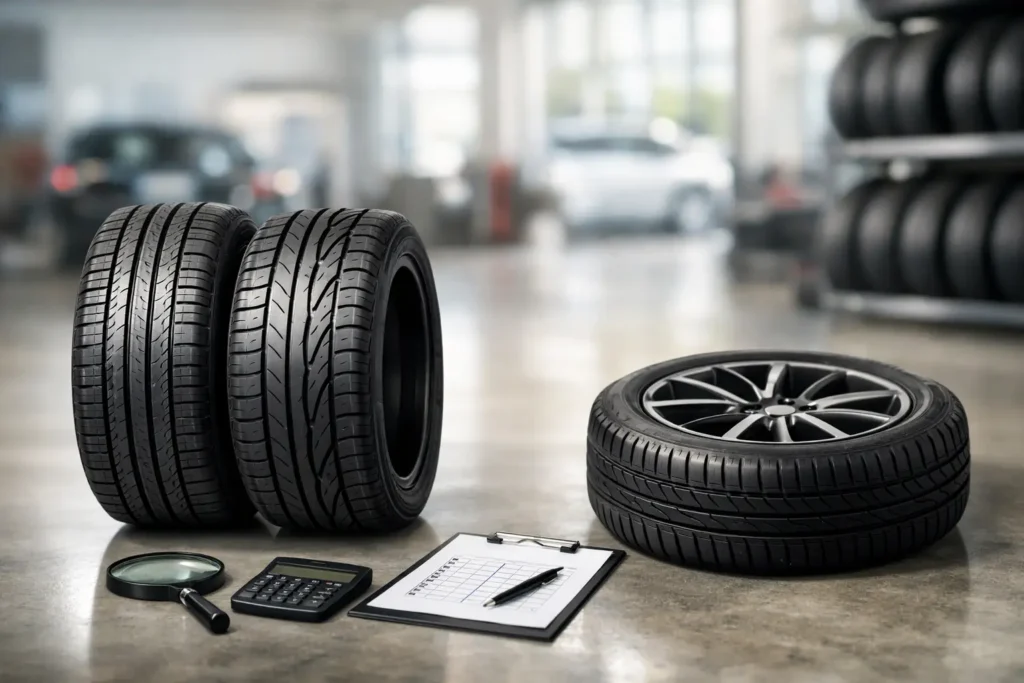
A low tire price can feel like a win right up until the first hard rain, the first snowy morning, or the first time the vehicle starts humming on the highway. That is why an affordable tire brands comparison needs to look past sticker price. What matters is how a tire performs in real driving, how long it lasts, and whether it fits the kind of roads and weather you actually deal with.
For most drivers, the best affordable tire is not the cheapest one on the rack. It is the one that gives you dependable traction, even wear, a comfortable ride, and a fair replacement interval without costing premium-brand money. Around Minnesota, that also means paying attention to tread design. Open shoulder tires are often the smarter choice for cars and trucks because they do a better job clearing water in summer and finding traction in snow and slush when winter hangs around longer than anyone wants.
What an affordable tire brands comparison should really measure
A lot of budget tire shopping gets narrowed down to one question: how much per tire? That is understandable, but it misses the bigger picture. A tire that costs less up front can end up costing more if it wears out early, gets noisy fast, or leaves you with weak wet-road braking.
A fair comparison should look at tread life, wet traction, winter capability, ride quality, road noise, warranty support, and consistency from one model line to the next. Brand reputation matters, but model matters more. Nearly every major tire maker has value-focused lines, and some lesser-known brands build a few solid options alongside some weaker ones. That is why blanket statements like “this brand is good” or “that brand is cheap” do not tell the whole story.
For everyday drivers, the right question is simpler: what tire gives me the safest and most predictable performance for the money I want to spend? That answer depends on your vehicle, your mileage, and whether you need one tire to handle both July downpours and January side streets.
Affordable tire brands comparison by value tier
At the top end of the affordable range, you usually find brands that sit just below the premium names. These tires are not bargain-basement cheap, but they often deliver the best value because they balance price with better compound quality, more consistent construction, and stronger tread design. If you drive a lot, this tier often makes more sense than going as cheap as possible.
In the middle tier, there are many solid choices for commuters and family vehicles. This is where plenty of drivers land. These brands often offer respectable treadwear, decent ride comfort, and acceptable wet handling without pushing the price too high. The trade-off is that winter grip, road noise control, or long-term wear may not be as strong as the better value options.
At the lowest price tier, you can absolutely find tires that get a vehicle back on the road safely, but this is where caution matters most. Some lower-cost tires do fine for local driving and lighter annual mileage. Others look good on paper and wear or perform poorly once conditions get rough. Wet braking and snow traction are usually where the gap shows up first.
That is why comparing by tier is more useful than comparing by price alone. A tire that is $15 or $20 more per tire may be a better deal if it lasts longer or performs better when conditions turn bad.
Brands that often make sense for budget-conscious drivers
Several brands tend to come up in value-focused conversations because they consistently offer decent performance at a fair price. Some are second-tier brands backed by larger manufacturers. Others are independent names that have built a following by staying competitive on cost.
The strongest affordable options usually share a few traits. They offer good wet traction, predictable braking, and tread patterns that are not trying to do too much. For Minnesota drivers, open shoulder designs deserve extra attention because they help evacuate water and slush instead of holding it in the tread. That can make a real difference in both summer storms and shoulder-season snow.
The weaker affordable options often lean hard on marketing terms and warranty numbers while cutting corners in the areas drivers actually feel. That can mean vague steering response, faster wear on heavier vehicles, or poor confidence on packed snow. A long mileage warranty sounds great until the tire gets loud halfway through its life or loses grip sooner than expected.
Why tread design matters as much as brand name
A lot of people shop brand first, then model. In practice, tread design often tells you more. If you want a better feel for this topic, Joe’s All Tire has more information in the tire knowledge center at www.joesalltire.com/knowledge-center/.
An open shoulder tread design is one of the first things worth checking. On many all-season tires, open shoulders help move water away from the contact patch and improve traction when roads are wet, slushy, or lightly snow-covered. That matters in a place where one set of tires may be dealing with hot pavement, standing water, freezing mornings, and surprise snow all within the same year.
Closed shoulder designs can sometimes run a little quieter, and they may work fine in milder climates or for specific touring applications. But if your priority is practical traction through changing seasons, open shoulders usually offer the more dependable setup. For cars, crossovers, and light trucks, that pattern often gives you a better mix of daily drivability and all-weather confidence.
This is one area where cheap tires can disappoint. Two tires may look similar online, but the actual tread voids, siping, and shoulder pattern can make one feel secure and the other feel nervous when roads get slick.
The trade-offs between cheap, affordable, and smart buys
There is a difference between cheap and affordable. Cheap means the lowest possible purchase price. Affordable means a tire you can reasonably fit into your budget without giving up too much safety or service life. A smart buy is where those two ideas meet.
If you drive only short distances, put low annual mileage on your vehicle, and avoid severe weather when possible, a lower-cost tire may work out just fine. If you commute daily, carry family, or drive a pickup that sees changing loads and rougher roads, stepping up a level usually pays off.
The same goes for used versus new. A used tire can be the right short-term answer in certain situations, especially when budget is tight and the tire is inspected properly. But it is not the same as getting a new matched set with known age, tread depth, and warranty support. Honest advice matters here because the right answer is not always the most expensive one.
When spending a little more is worth it
If a tire gives you meaningfully better wet stopping, more even wear, and stronger winter traction, the extra cost can be justified quickly. The difference is not abstract. It shows up when you hit the brakes at an intersection in the rain or pull away from a snowy stop sign.
It is also worth paying a bit more if your vehicle is sensitive to vibration or alignment wear. Better-built tires tend to balance more consistently and stay more stable over time. That can save frustration later, especially if you have already dealt with ride issues.
How to choose the right affordable tire for your vehicle
Start with how you actually drive, not how the tire is advertised. A commuter sedan, a family SUV, and a half-ton pickup do not ask the same things of a tire. Even within the same size, one model may be better for highway comfort while another is better for year-round traction.
Think about your top two priorities. If they are long life and quiet ride, you may want a touring-style all-season from a strong value brand. If they are rain and snow confidence, look harder at all-weather capability and open shoulder tread design. If you haul, tow, or drive a truck, load rating and casing strength matter just as much as brand reputation.
It also helps to look at replacement timing honestly. If your current tires are already getting noisy, wearing unevenly, or struggling in rain, waiting for them to get completely bald is not saving money. It is just shrinking your margin for error.
One thing local drivers appreciate at All Tire is getting a straight answer about what is worth buying and what is not. Not every vehicle needs a premium tire. Not every budget tire is a bad tire. The right match comes from looking at the vehicle, the condition of the suspension and alignment, and the type of weather the tire will face.
A better way to compare tire value
The best affordable tire brands comparison is not a contest to find the lowest number. It is a way to avoid paying twice – once at the counter and again in poor wear, weak traction, or early replacement.
If you want the short version, look for brands with a solid reputation in the value tier, choose the model based on tread design and driving conditions, and give extra credit to open shoulder patterns if you need better wet and winter traction. That approach usually leads to a tire that feels better on the road and makes more sense over time.
A good tire should fit your budget, but it should also make your vehicle feel planted, predictable, and ready for whatever the week brings. That is money spent where it counts.
