
Michelin CrossClimate vs General AltiMAX RT45 for Minnesota Drivers
The Michelin CrossClimate vs General AltiMAX RT45 decision usually comes down to one honest question: do you need a tire that can handle real Minnesota winter conditions without swapping to dedicated winter tires, or do you want a dependable all-season tire that delivers solid everyday value?
Both are reputable choices, but they’re built for different priorities. The Michelin CrossClimate is the stronger year-round performer when snow, slush, and cold rain are part of your regular drive. The General AltiMAX RT45 is a practical all-season option for drivers who want a comfortable ride, good tread life, and a more budget-conscious price point.
At Joe’s ALL TIRE, locals know us as ALL TIRE, and we don’t believe in steering every driver toward the same tire. Your vehicle, commute, parking situation, and winter driving habits matter more than a brand name on the sidewall.
The Big Difference: All-Weather vs. All-Season
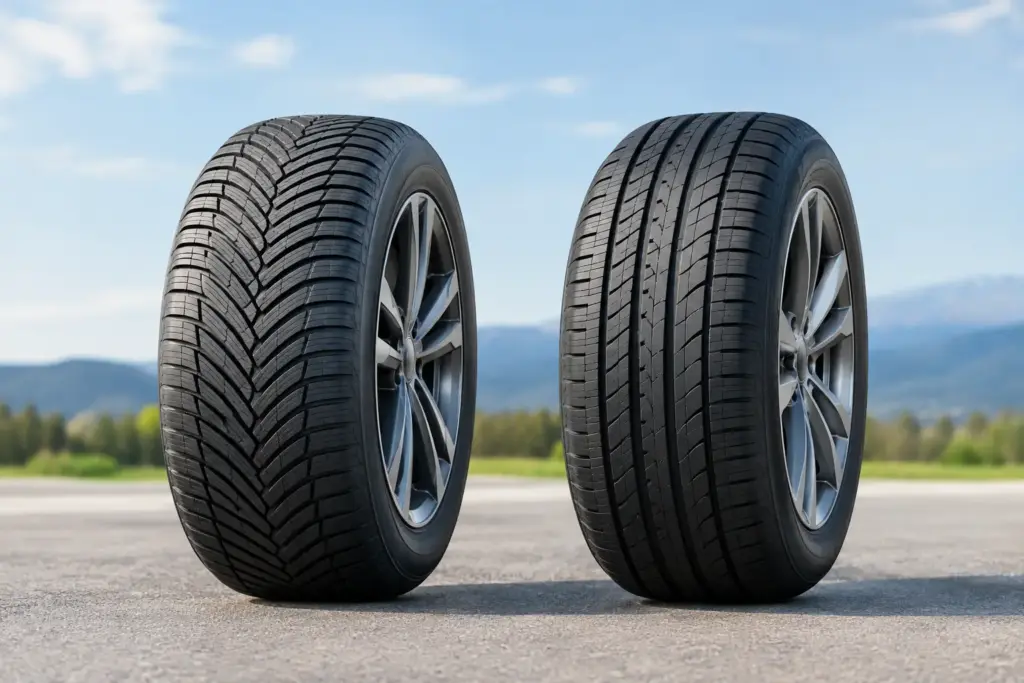
The Michelin CrossClimate, especially the CrossClimate2 commonly fitted on cars, SUVs, and crossovers, is an all-weather tire. It carries the Three-Peak Mountain Snowflake designation, meaning it has met a recognized standard for snow traction. Its directional tread pattern uses wide channels and aggressive edges to move water and slush away from the contact patch.
The General AltiMAX RT45 is an all-season tire with an M&S (Mud & Snow) rating. That makes it suitable for normal seasonal changes, light snow, rain, and dry pavement, but it is not built to offer the same snow traction standard as a Three-Peak Mountain Snowflake all-weather tire.
That distinction matters in Elk River and surrounding communities. Minnesota can have roughly five months where snow and ice affect the roads, and a tire that feels fine in October may show its limits during a slick January morning. If you regularly drive before plows are out, travel rural roads, or need confidence getting your family home in changing conditions, the CrossClimate has a clear advantage.
Michelin CrossClimate: Better for Snow, Rain, and Changing Conditions
The CrossClimate earns its reputation because it does more than one job well. It is designed to remain flexible in colder temperatures while still being stable and comfortable on dry summer pavement. For drivers who don’t want the cost or storage needs of a second set of winter tires, that versatility is a major benefit.
Its tread design is particularly helpful in heavy rain and slush. Water evacuation matters because standing water can reduce a tire’s grip quickly. At ALL TIRE, we also pay close attention to shoulder and channel design when recommending tires. We strongly favor open shoulder tire designs for cars and trucks whenever the application allows because open shoulders give water, snow, and slush more room to escape. That supports better rain traction in summer and better bite in winter.
The trade-off is price. Michelin CrossClimate tires generally cost more upfront than the General option. They can also have a slightly firmer or more noticeable road feel than a traditional touring all-season, depending on your vehicle and tire size. Still, many drivers find the extra cost worthwhile when they consider the confidence they gain on wet roads, packed snow, and slushy intersections.
The CrossClimate makes the most sense if you drive frequently, have a longer commute, own a family vehicle, or simply don’t want to gamble on the weather forecast. It’s also a strong fit for drivers whose vehicles have limited clearance or front-wheel drive, where every bit of traction helps.
General AltiMAX RT45: Strong Everyday Value
The General AltiMAX RT45 is a straightforward, well-regarded all-season tire. It is designed for a quiet ride, predictable handling, and long tread life. For a driver who spends most of the winter on cleared roads, drives conservatively in snow, or has the flexibility to stay home during severe storms, it can be a very sensible choice.
One advantage of the RT45 is its value. You may be able to save a meaningful amount at purchase while still getting a quality tire from an established manufacturer. It is not a throwaway tire or a risky bargain-bin choice. It is simply designed around normal all-season use rather than all-weather snow capability.
The RT45 is often a good match for sedans, minivans, commuter crossovers, and drivers who put a lot of highway miles on their vehicles. It offers stable everyday manners, and its tread-wear focus can make it appealing when long-term operating cost is the main concern.
Its limitation is simple: when winter gets serious, it cannot match the CrossClimate’s snow-focused traction. In light snow, the difference may not feel dramatic. On packed snow, slush, hills, or roads that haven’t been plowed yet, the Michelin’s additional winter capability becomes easier to appreciate.
Ride Comfort, Noise, and Tread Life
Both tires are designed for regular passenger use, not harsh off-road duty. The General AltiMAX RT45 tends to appeal to drivers who prioritize a traditional, smooth touring-tire feel. It’s a comfortable tire for daily errands, highway driving, and normal commuting.
The Michelin CrossClimate is also civilized on the road, but its more aggressive all-weather tread can produce a different feel. Some drivers may notice more tread presence than they would with a conventional all-season tire, especially as it wears. That is not necessarily a downside. The tread features that help it manage snow and rain have to come from somewhere.
Tread life depends heavily on alignment, inflation, rotations, and how the vehicle is driven. A tire with a strong mileage warranty still won’t last if the alignment is off or the tires are run low on air. Uneven wear on the inner edge, outer shoulder, or across the tread can shorten tire life fast and affect how the vehicle handles in rain.
This Isn’t Walmart. A lower tire price doesn’t help much if the wrong tire gets installed, the balance is rushed, or an alignment issue goes unnoticed. Proper mounting, balancing, torque procedures, and an honest look at wear patterns are part of getting the value you paid for.
Which Tire Should You Choose?
Choose the Michelin CrossClimate if winter traction is high on your list, you drive in snow and slush often, or you want one set of tires that is more capable through all four seasons. It costs more, but it offers a meaningful safety and confidence advantage for many Minnesota drivers.
Choose the General AltiMAX RT45 if you want a quality all-season tire at a more manageable price, your winter driving is mostly on maintained roads, and you’re comfortable slowing down or avoiding travel during the worst conditions. It is a smart value tire, not a compromise made without thought.
If you’re torn between the two, the answer may come down to your actual weekday routine. A driver making a short local trip after roads are plowed has different needs than someone commuting from Zimmerman, Big Lake, or St. Cloud before sunrise. We can look at your tire size, vehicle, mileage, and budget and give you a straight answer. Just tap the blue phone call button in the lower left corner on mobile – we’re just a call away.
Frequently Asked Questions
Is the Michelin CrossClimate good in Minnesota snow?
Yes. The Michelin CrossClimate is an all-weather tire with the Three-Peak Mountain Snowflake designation, so it is better suited to Minnesota snow, slush, and cold wet roads than a standard all-season tire. It is not a replacement for a dedicated winter tire in every extreme situation, but it is one of the stronger year-round options for drivers who use one set of tires.
Is the General AltiMAX RT45 a winter tire?
No. The General AltiMAX RT45 is an all-season tire with an M&S (Mud & Snow) rating. It can handle light snow and normal winter conditions, but it does not provide the same snow traction level as an all-weather or dedicated winter tire.
Which tire lasts longer, the CrossClimate or RT45?
Both can provide strong tread life when properly maintained. The actual result depends on tire pressure, rotations, alignment, road conditions, and driving style. The RT45 is designed with long-term touring value in mind, while the CrossClimate’s tread is engineered to balance mileage with all-weather grip.
Do I need open shoulder tires for my vehicle?
Not every tire has the same shoulder design, but open shoulder channels are a feature worth considering for Minnesota driving. They help clear water and slush, supporting wet-weather traction and winter performance. ALL TIRE can help identify options with the right tread design for your vehicle and the roads you drive.
Can ALL TIRE inspect my current tires before I buy new ones?
Absolutely. A quick inspection can reveal whether you have enough usable tread left, uneven wear from alignment problems, a vibration concern, or damage that needs attention. Getting that answer before the next snowstorm is usually the smartest move.