

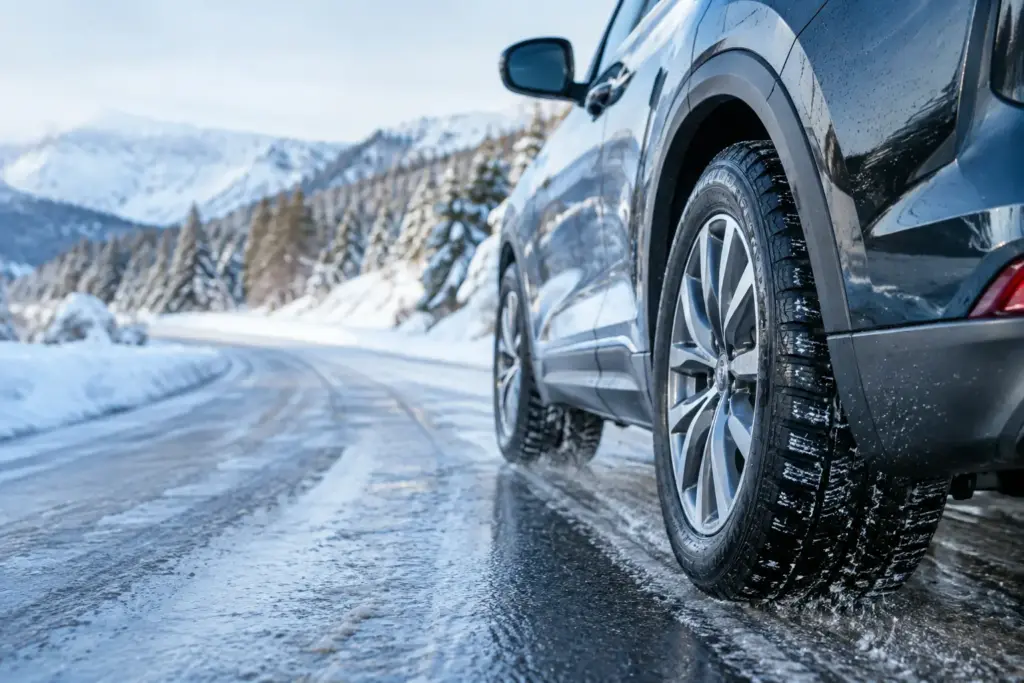
A tire that lasts a long time but loses its grip in a hard rain isn’t much of a bargain in Minnesota. Drivers looking for high mileage tires with awesome traction in rain and snow need to look beyond the warranty number on the sidewall. The right tire has to handle dry commuting, standing water, slush, packed snow, and the occasional surprise cold snap without wearing out before its time.
At Joe’s ALL TIRE, we see the trade-off every day. Long tread life, quiet ride, fuel economy, rain grip, and winter capability can all work together, but no single tire is perfect at everything. The goal is to match the tire to the vehicle, the miles you drive, and the roads you actually travel.
What Makes a High-Mileage Tire Grip Better?
Tread life starts with the rubber compound and tread depth, but traction comes down to how that tread works under pressure. On wet pavement, your tire has to move water away quickly enough for the rubber to contact the road. In snow, it needs enough biting edges to grab and release snow rather than packing up.
That is why ALL TIRE strongly recommends open shoulder tire designs for many cars, SUVs, and light trucks in our area. An open shoulder has wider channels near the outer edge of the tread. Those channels give water, slush, and loose snow somewhere to go. The result is better resistance to hydroplaning in summer storms and more usable traction during Minnesota’s long snow season.
A tire with a very closed, solid shoulder can sometimes feel quiet and stable on dry roads. But for drivers around Elk River who face months of wet, snowy, and slushy conditions, it may not clear water and snow as effectively. Open shoulders aren’t the only thing that matters, but they’re a feature worth paying attention to when comparing tread patterns.
The tread warranty doesn’t tell the whole story
A 70,000-mile warranty can be appealing, especially when you’re putting serious miles on a commuter, family SUV, or pickup. Still, that number is a mileage projection under specific conditions. Alignment, inflation pressure, rotations, road surfaces, load weight, and driving habits all affect how long a tire lasts.
More importantly, some tires earn a high mileage rating by using a harder compound or a tread design that favors wear over grip. That can be fine for certain warm, dry climates. Here, a few extra warranty miles don’t help much if the tire feels unsettled in heavy rain or struggles when the first snow arrives.
Look for a tire that balances a solid mileage warranty with deep circumferential grooves, open shoulder channels, and plenty of sipes. Sipes are the small cuts across the tread blocks that create extra biting edges on wet pavement and snow.
Rain Traction Comes First More Often Than You Think
Most drivers think about snow when tire shopping in Minnesota, but rain traction deserves just as much attention. A summer downpour can create standing water faster than a tire can clear it, especially on worn pavement, highway ruts, and neighborhood intersections.
As tread wears down, wet traction drops before a tire looks completely bald. The main grooves get shallower, leaving less room to evacuate water. A tire can still have visible tread and yet be approaching the point where rainy-day confidence starts to disappear.
For a high-mileage tire, check these design details:
- Wide, continuous grooves that carry water away from the contact patch
- Open shoulder areas that release water and slush at the edge of the tread
- Full-depth sipes that continue helping as the tire wears
- A tread compound designed to stay flexible when temperatures fall
These features don’t guarantee that every all-season tire will act like a dedicated winter tire. They do make a meaningful difference when roads are soaked, slushy, or lightly snow-covered.
High Mileage Tires With Awesome Traction in Rain and Snow
For many Minnesota drivers, the sweet spot is a quality all-weather or all-season tire with strong wet performance, an open shoulder tread design, and a realistic mileage warranty. The vehicle matters, too. A front-wheel-drive sedan, an all-wheel-drive crossover, and a half-ton pickup put very different demands on their tires.
If winter confidence is a major priority, look for the Three-Peak Mountain Snowflake symbol. That marking means the tire meets a recognized standard for severe snow performance. M&S on a sidewall means Mud & Snow, but it does not automatically mean the tire has the same winter capability as a Three-Peak Mountain Snowflake-rated option.
For drivers who regularly head out before plows arrive, commute rural roads, or make frequent winter trips, a dedicated winter tire may still be the safer choice. The trade-off is that winter tires typically wear faster in warm weather, so they should come off when spring conditions return. For others, a well-chosen all-weather tire can offer a practical year-round middle ground.
Your vehicle and driving routine decide the answer
There isn’t one tire that makes sense for every driver. A retired couple driving mostly around town may value a quiet ride and long tread life. A family making daily school and work trips may put rain and snow grip at the top of the list. A pickup owner hauling a trailer needs a tire with the right load rating as well as dependable traction.
Be honest about your routine. Do you drive interstate miles every day? Park outside? Travel gravel roads? Tow equipment? Drive early mornings when roads are at their worst? Those answers are more useful than simply asking for the longest-lasting tire on the shelf.
If you’re weighing long wear against stronger wet and snow performance, ALL TIRE can help sort out the choices without making the conversation complicated. Mobile visitors can tap the blue call button in the lower left corner to ask questions or schedule an appointment.
Protect the Tires You Buy
Even a well-designed tire won’t deliver its full mileage or traction if the basics are ignored. Tire pressure needs regular attention because cold weather lowers pressure, and underinflated tires can wear faster, run hotter, and handle poorly. A TPMS warning is worth checking promptly, but remember that a sensor only warns after pressure has already dropped enough to trigger it.
Regular rotation helps spread wear across all four tires. Alignment matters just as much. If the inside or outside edge is wearing faster, the vehicle may have an alignment issue, worn suspension components, or another problem that needs attention. A vibration can point to balance trouble, a damaged tire, wheel issue, or a wheel bearing concern.
This is where local service makes a difference. Joe at ALL TIRE can look at the actual wear pattern, not just sell a replacement based on tire size. That helps prevent a new set of tires from inheriting the same problem that ruined the last set.
Cheap tires can look tempting when an unexpected replacement comes up. But weak wet traction, poor winter behavior, inconsistent construction, and short real-world life can make that savings disappear quickly. This Isn’t Walmart. The right tire should fit your vehicle, your road conditions, and your budget, then be mounted, balanced, and inspected correctly.
FAQ
Can all-season tires really handle Minnesota snow?
They can handle light to moderate snow when they have good tread depth, flexible rubber, useful siping, and an open shoulder design. For frequent deep snow, ice, unplowed roads, or early-morning travel, Three-Peak Mountain Snowflake-rated all-weather or dedicated winter tires are a stronger choice.
Are open shoulder tires louder than closed shoulder tires?
Sometimes, but not always. Open shoulder designs can create a little more road noise depending on the tire model and vehicle. For most drivers, the added ability to clear rain, slush, and snow is a worthwhile trade-off.
Does a higher mileage warranty mean the tire will last longer?
Not necessarily. Warranty mileage is one factor, but inflation, alignment, rotations, load, and driving conditions determine actual tread life. A tire with a slightly lower warranty may provide better wet and winter traction for the miles you drive.
What does M&S mean on a tire?
M&S means Mud & Snow. It is a common designation on many all-season and light-truck tires, but it is not the same as the Three-Peak Mountain Snowflake symbol. If severe snow traction matters, ask about tires carrying that mountain-and-snowflake marking.
When should I replace tires for safer rain driving?
Don’t wait until they look completely worn out. As grooves get shallow, water evacuation drops quickly. If you’re noticing longer stopping distances, more slipping in rain, uneven wear, or frequent traction-control activity, have the tires checked. A quick inspection can give you a clear answer before the next storm does.
