

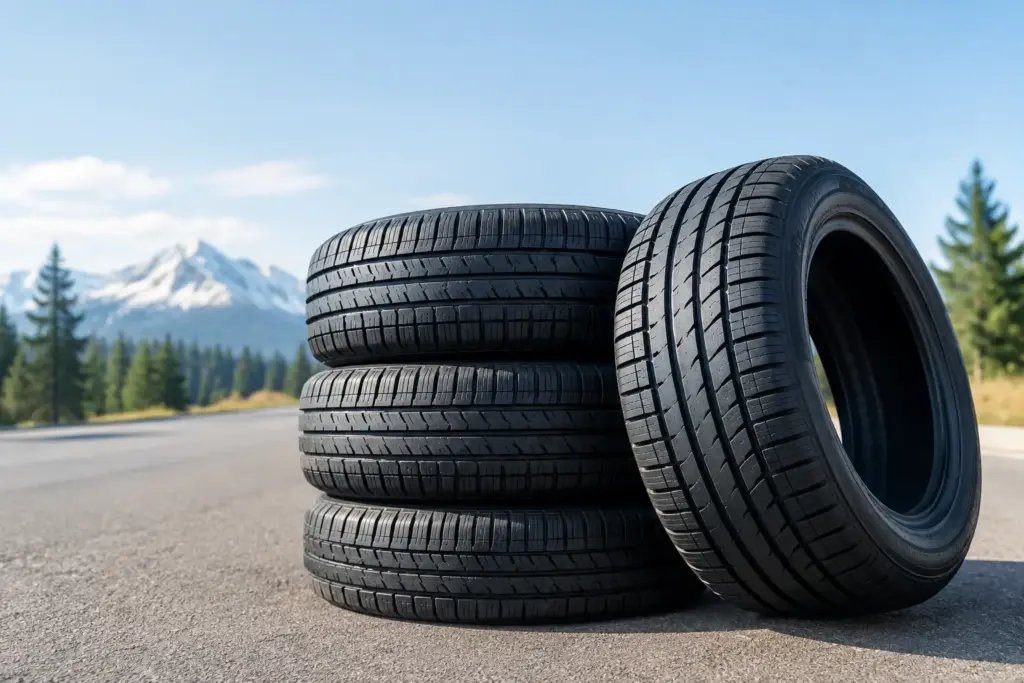
A tire sidewall can say M&S and still leave a Minnesota driver disappointed after the first hard snowfall. That’s why the criteria for all-season or M&S rating matter: the letters and symbols tell part of the story, but tread design, rubber compound, and how you drive tell the rest.
At Joe’s ALL TIRE, we see this every winter in Elk River. A customer may have plenty of tread left, yet their vehicle slips on packed snow, feels loose in cold rain, or struggles to get moving from a stop. The right tire choice isn’t about picking the most aggressive-looking tread. It’s about matching the tire to real roads, real weather, and the way your vehicle is used.
What Does an M&S Rating Mean?
M&S stands for Mud & Snow. It’s a designation molded into the tire sidewall, usually shown as M+S, M/S, or M&S. The marking generally means the tire has a tread pattern designed with more open voids, edges, and spacing than a standard highway tire. Those features can help the tire move through loose material such as light snow, slush, mud, and gravel.
The catch is that M&S is not a guarantee of severe-snow performance. A tire can qualify for an M&S marking based largely on its tread geometry. It does not have to pass the same standardized snow-traction test required for the Three-Peak Mountain Snowflake symbol.
For a driver who spends most of the year on plowed streets and highways, a quality all-season tire with an M&S rating may be a practical fit. But Minnesota gets roughly five months where snow, ice, slush, and freezing temperatures can all show up in the same week. That’s where the details beyond the M&S letters become worth paying attention to.
Criteria for All-Season or M&S Ratings Explained
An all-season tire is meant to provide balanced performance across changing conditions. It should offer stable dry-road handling, dependable wet traction, acceptable light-snow capability, a comfortable ride, and reasonable tread life. That broad purpose makes all-season tires popular for commuters, family vehicles, crossovers, and many light trucks.
An M&S rating focuses more narrowly on tread characteristics that can help in loose conditions. Many all-season tires carry M&S markings, but the two terms do not mean exactly the same thing. An all-season tire is a category of tire; M&S is a sidewall designation related to tread design.
When we’re helping someone choose tires at ALL TIRE, we look past the label and consider a few practical factors:
- Tread pattern: Deep grooves and an open shoulder tire design help evacuate water and slush instead of trapping it under the tire.
- Siping: These small cuts across the tread blocks create extra biting edges, which can improve grip on packed snow and wet pavement.
- Rubber compound: Cold temperatures can make some compounds firmer and less flexible. A tire that stays pliable in the cold generally grips better.
- Tread depth: Even a good M&S tire loses winter usefulness as the tread wears down. Snow traction drops well before a tire is completely worn out.
- Vehicle and driving habits: A front-wheel-drive commuter, a loaded work pickup, and an all-wheel-drive SUV don’t place the same demands on a tire.
Open shoulder designs deserve special attention here. ALL TIRE strongly recommends open shoulder tires for cars and trucks when the goal is stronger summer rain performance and better winter traction. The open areas around the outer tread help move water, slush, and loose snow away from the contact patch. That can reduce hydroplaning risk in heavy rain while giving the tire more room to bite in snow.
M&S vs. Three-Peak Mountain Snowflake
The Three-Peak Mountain Snowflake symbol, often called 3PMSF, is different from M&S. Tires carrying this mountain-and-snowflake mark have passed a standardized test for snow traction. It’s a more meaningful indicator for drivers who regularly face packed snow and cold conditions.
That does not mean every driver needs a dedicated winter tire. It depends on where and when you drive. A good all-weather tire with the Three-Peak Mountain Snowflake symbol can be a strong middle ground for many Minnesota drivers. It stays on the vehicle year-round but offers more snow traction than a typical all-season M&S tire.
Dedicated winter tires remain the stronger choice for people who drive before roads are plowed, travel rural routes, work early shifts, or simply want the most confidence possible on snow and ice. The trade-off is that winter tires wear faster in warm weather and should be removed when spring temperatures settle in.
All-wheel drive helps a vehicle get moving, but it does not create more grip when it’s time to brake or turn. Tire traction still decides whether the vehicle stops predictably. That’s one reason the right tires are a safety decision, not just a seasonal purchase.
How to Choose for Minnesota Roads
Start by being honest about your normal driving. If you mostly drive cleared roads around Elk River, Zimmerman, Otsego, or the Twin Cities and can stay home during the worst weather, a quality all-season M&S tire with open shoulders may serve you well. Choose a tire with strong wet-road ratings and enough siping to handle light snow.
If you drive every day regardless of conditions, an all-weather tire with the Three-Peak Mountain Snowflake symbol is often worth considering. It gives up a little of the long tread life or crisp warm-weather handling some all-season tires offer, but it adds useful confidence when roads are snowy or slushy.
For pickups and light trucks, avoid assuming that a more aggressive tread automatically means better winter control. Some heavy-duty all-terrain tires can be loud, stiff, and less capable on ice than a well-designed all-weather or winter tire. Load range, tire pressure, tread pattern, and the weight carried in the truck all matter.
If you’re looking at a tire because yours are worn, your vehicle vibrates, or you’re tired of fighting for traction in the rain, it’s worth getting direct advice before buying. Just tap the blue phone call button in the lower left corner to ask questions or schedule an appointment – we’re just a call away.
Don’t Judge a Tire by the Sidewall Letters Alone
The M&S mark is useful, but it is only a starting point. Two M&S tires can perform very differently in the same snowstorm. One may have tighter siping, a more flexible cold-weather compound, and open shoulders that clear slush effectively. Another may be built mainly for long highway mileage and light-duty traction.
Price also needs context. The least expensive tire can cost more over time if it wears unevenly, rides poorly, has weak wet traction, or leaves you replacing it earlier than expected. “This Isn’t Walmart” means we’re not interested in treating tires like a shelf item with no conversation attached. Joe at ALL TIRE looks at the vehicle, the tire size, the condition of the existing tires, and what you actually need before making a recommendation.
Proper installation matters just as much as the tire selection. Mounting, balancing, correct inflation, TPMS service, and alignment checks when wear patterns suggest a problem all help a tire deliver the traction and life it was designed to provide. A great tire installed carelessly is no bargain.
FAQ
Is M&S the same as a winter tire?
No. M&S indicates a tread design suited to mud and light snow, but it does not prove the tire meets severe-snow traction standards. Look for the Three-Peak Mountain Snowflake symbol when winter performance is a priority.
Are all all-season tires rated M&S?
Many are, but not every tire marketed as all-season has identical tread design or winter capability. Check the sidewall markings and compare the tire’s intended use, wet traction, and snow features.
What’s better for Minnesota: all-season or all-weather tires?
It depends on your driving. A quality all-season tire works well for many drivers on regularly plowed roads. An all-weather tire with the Three-Peak Mountain Snowflake symbol is often better for drivers who need more dependable snow traction without changing tires twice a year.
Why do open shoulder tires help in rain and snow?
Open shoulders create channels for water, slush, and loose snow to escape from under the tread. That helps the tire maintain contact with the road, improving traction during summer downpours and winter slush.
Can I replace only two tires if the other two are still good?
Sometimes, but the answer depends on tread depth, tire condition, vehicle type, and whether it has all-wheel drive. Uneven tire diameters can create handling issues and may be harder on some AWD systems. Have the full set inspected before deciding.
The marking on your tire matters, but the confidence you feel on a wet highway or snowy side street matters more. Bring in the vehicle, explain where you drive, and let ALL TIRE help you choose a tire that fits the road ahead.
