

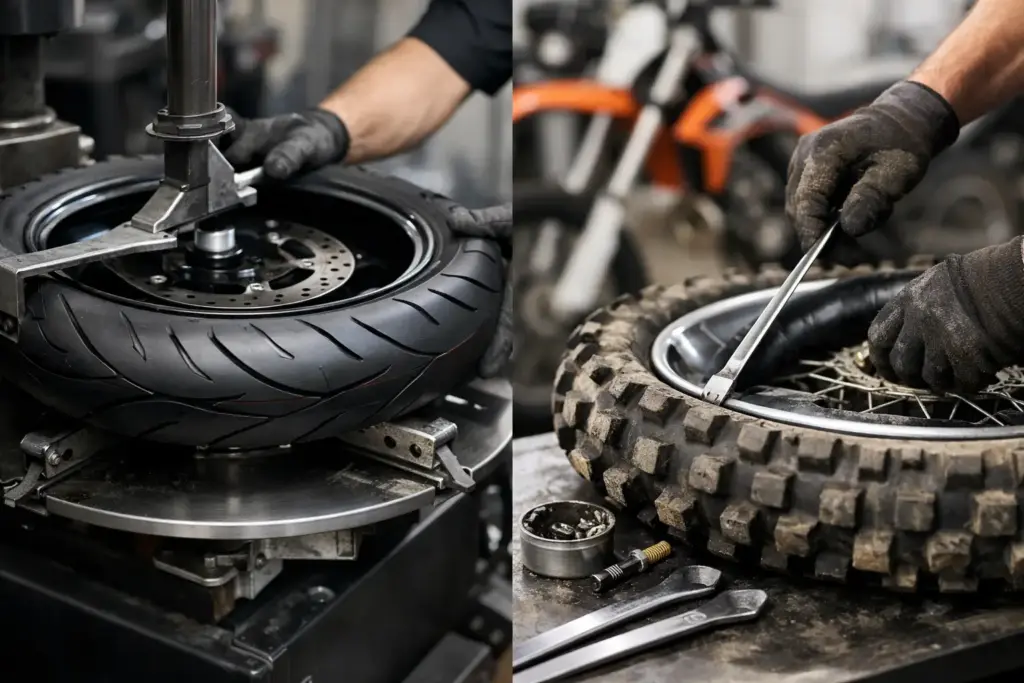
A dirt bike tire can look fine in the garage and still let you down on the trail. A bead that isn’t fully seated, a pinched tube, a loose rim lock, or a small puncture can turn a good ride into a long walk back. Motorcycle tire mounting and dirt bike tire repair aren’t jobs to rush, especially when traction, control, and your safety are on the line.
For most riders, the goal is simple: get back on the bike with a tire that holds air, hooks up properly, and stays where it belongs on the rim. Getting there takes the right equipment, a careful inspection, and an honest call about whether a repair is worthwhile or a replacement makes more sense.
Motorcycle Tire Mounting Starts With the Right Fit
Mounting a motorcycle tire is more involved than getting rubber over a wheel. The tire has to match the wheel size, the bike’s use, and the rider’s needs. A street bike, dual-sport, ATV-style trail machine, and motocross bike all place different demands on a tire.
Start by checking the size printed on the sidewall and matching it to the wheel. Also pay attention to the tire’s direction arrow. Many motorcycle and dirt bike tires are directional, meaning the tread needs to rotate the correct way to clear mud, channel water, and provide predictable braking traction.
The wheel itself deserves attention before any new tire goes on. Bent rims, cracked wheels, damaged spoke areas, worn rim strips, and corroded bead surfaces can all create trouble. On a tube-type dirt bike wheel, the rim strip protects the tube from spoke nipples. If it’s torn, shifted, or missing, a new tube may not last long.
A quality mounting job also means using proper tire lubricant and controlled pressure when seating the bead. Forcing a dry tire with aggressive tools can damage the bead or pinch the tube. That kind of damage may not always show up until the tire starts losing air later.
Tubes & Rim Locks
Dirt bike tires commonly use inner tubes, and that’s where many mounting problems begin. A tube can get trapped between the tire bead and rim, nicked by a tire iron, or installed with a wrinkle that eventually creates a weak spot. A light dusting of tire-safe powder and just enough initial air to give the tube shape can help prevent a pinch during installation.
Rim locks matter, too. They help keep the tire from spinning on the rim during hard acceleration and braking at lower trail pressures. Without a properly installed and tightened rim lock, the tire can shift, pull the valve stem sideways, and damage the tube.
Street motorcycles and some dual-sport bikes may also need wheel balancing after mounting. At higher road speeds, even a small imbalance can cause a vibration through the bars, seat, or foot pegs. If the bike suddenly feels different after tire work, don’t assume it’ll wear in. Have it checked.
When Dirt Bike Tire Repair Is a Good Idea
A puncture doesn’t automatically mean the tire is done. Dirt bike tire repair can be a reasonable solution when the damage is limited, the tire still has useful tread, and the casing hasn’t been compromised. The location and type of damage matter far more than how quickly you want to get riding again.
A small, clean puncture in the tread area may be repairable, depending on whether the bike uses a tube or tubeless setup. With a tube-type tire, the tube itself is usually the item being evaluated for repair or replacement. With a tubeless tire, the casing and the puncture location need a close inspection.
Damage in the sidewall, near the bead, or along a torn carcass is a different story. Those areas flex heavily and carry serious load. A tire with cuts, bulges, exposed cords, dry cracking, or a damaged bead shouldn’t be trusted just because it can temporarily hold air.
Here are four signs a replacement is usually the smarter call:
- The tire has sidewall cuts, exposed cords, bulges, or deep cracking.
- The bead is torn, distorted, or won’t seal correctly against the rim.
- The tread is badly worn, chunked, or missing knobs needed for traction.
- The tube has multiple repairs, a torn valve stem area, or damage from being ridden flat.
It can be tempting to stretch the life of a worn tire, particularly if you only ride occasionally. But a worn rear tire can spin when you need drive, and a worn front tire can wash out when you need steering bite. That’s not the place to save a few dollars.
A Flat Tire Can Be a Symptom, Not the Whole Problem
When a dirt bike tire goes flat, the puncture may be obvious – a nail, thorn, staple, or sharp rock can leave clear evidence. Other causes take more looking. A leaking valve core, damaged valve stem, loose rim lock, cracked rim, or debris inside the tire can all lead to repeated air loss.
Before installing a new tube or completing a repair, inspect the inside of the tire with your hands carefully. Remove anything that could puncture the replacement tube. Check the rim tape, the valve hole, and the rim lock. If the old tube has two small holes close together, that’s often a clue that it was pinched during mounting or hit hard enough to compress against the rim.
Pressure choices also affect tire life. Lower pressure can improve grip on loose terrain, roots, and rocks, but it raises the chance of pinched tubes and rim damage. Higher pressure gives more protection and stability, though it can make the ride feel harsher and reduce traction in soft ground. The right setting depends on rider weight, terrain, tire construction, rim locks, and how aggressively the bike is ridden.
Make the Call Before the Next Ride
If you’re looking at a damaged tire or a bike that won’t hold air, it’s worth getting a straight answer before spending money on parts that won’t solve the real issue. Joe’s ALL TIRE is known locally for practical tire advice and careful workmanship, and ALL TIRE can help you talk through the issue and confirm whether your vehicle or tire service need is a fit for the shop.
If you need help deciding what to do next, mobile visitors can tap the blue call button in the lower left corner to ask questions or schedule an appointment. We’re just a call away.
For riders who also drive a car or pickup through Minnesota weather, don’t overlook the tires on the vehicle that gets you to the trailhead. ALL TIRE often recommends open shoulder tire designs for cars and trucks because they do a better job clearing water in summer rain and maintaining traction through Minnesota’s long snow and ice season. Tire design isn’t just about appearance – it affects how confidently a vehicle stops, turns, and moves through changing conditions.
That same practical thinking applies to motorcycle and dirt bike tires. Choose the tire for where and how you ride, not just the deepest-looking tread or the cheapest option on the shelf. “This Isn’t Walmart” means the focus should be on getting the right answer and doing the work correctly, not simply getting a tire on the wheel as fast as possible.
FAQs
Can I ride a dirt bike with a slow leak?
It’s not a good idea. A slow leak can become a flat without warning, and low pressure can damage the tube, tire, rim, or valve stem. Find the source before your next ride.
How often should I replace dirt bike tires?
It depends on riding style, terrain, storage, and tire compound. Replace them when knobs are rounded or torn away, the tire is cracked or hardened, traction has fallen off, or there is structural damage.
Do all dirt bikes use tubes?
No. Many traditional dirt bike wheels use tubes, while some newer setups use tubeless systems or specialized inserts. Check your wheel and tire setup before buying parts or attempting a repair.
Why is my valve stem leaning sideways?
A leaning valve stem can mean the tire has slipped on the rim, often from low pressure or a rim lock issue. Stop riding and inspect it before the valve stem tears away from the tube.
Does a motorcycle tire need to be balanced?
For road-going motorcycles, balancing is commonly recommended because it can prevent speed-related vibration. Dirt bikes ridden mostly off-road may have different needs, but any new vibration should be checked rather than ignored.
A tire that’s mounted carefully and inspected honestly gives you one less thing to worry about when the ride gets rough. When something doesn’t look right, trust that instinct and get the problem sorted before the next mile.
