
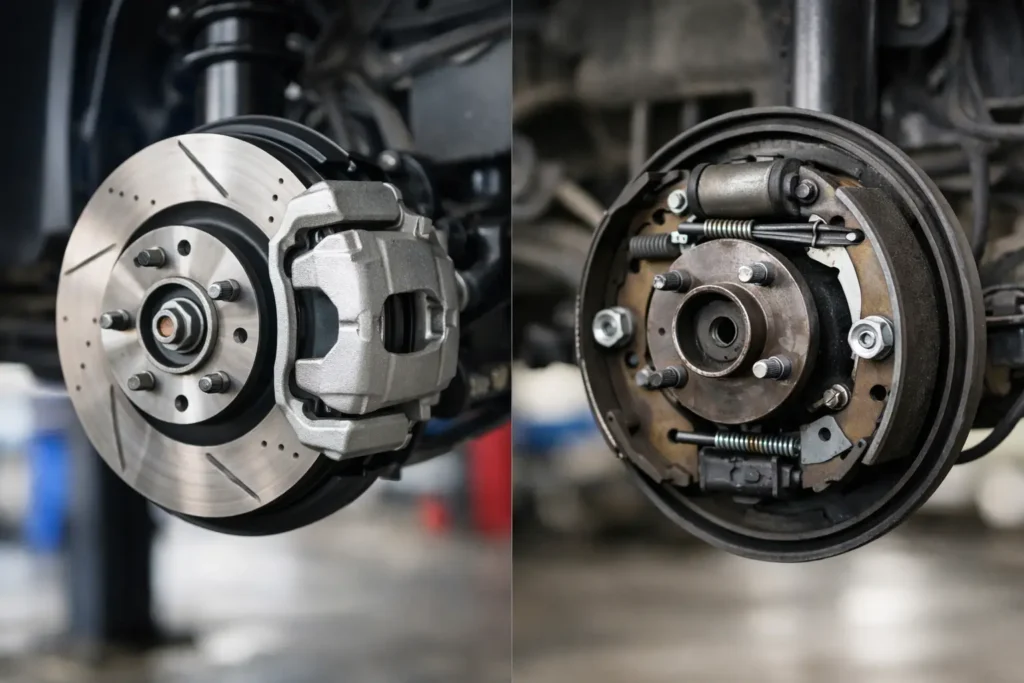
Most drivers do not think about their brake design until something feels off – a shake in the pedal, longer stopping distance, a pulling sensation, or a brake inspection that comes with news they were not expecting. When people ask about disc brakes versus drum brakes, what they usually want to know is simple: which one stops better, lasts longer, and makes more sense for their vehicle and budget.
That answer is not always one-size-fits-all. Disc brakes are generally better at handling heat and repeated braking. Drum brakes usually cost less and can still work well in the right application. What matters is how your vehicle is used, what condition the system is in, and whether the parts are being serviced the right way.
If you are trying to decide what repair makes sense or whether a brake recommendation sounds right, it helps to talk it through with someone who works on these systems every day. Just tap the blue phone call button in the lower left corner – we’re just a call away.
Disc Brakes Versus Drum Brakes: The Basic Difference
A disc brake uses a rotor, which looks like a flat metal disc, along with a caliper and brake pads. When you press the brake pedal, the caliper squeezes the pads against the rotor to slow the wheel.
A drum brake works differently. It uses a round drum that spins with the wheel and brake shoes inside that press outward against the inner surface of the drum. Both systems do the same job, but they go about it in different ways.
Most newer passenger vehicles use disc brakes on the front. Many also use disc brakes on the rear, but some cars, light trucks, and trailers still use rear drum brakes. That does not automatically mean something is outdated or cheap. In many cases, it is simply a design choice based on cost, parking brake function, and how much braking force the rear axle needs.
Why Disc Brakes Usually Perform Better
Disc brakes have become the standard for a reason. They shed heat faster, recover better after repeated stops, and tend to provide more consistent braking performance. That matters in real-world driving, especially when traffic is heavy, roads are wet, or you are braking often on hills.
Heat is a big deal in braking. Every stop turns motion into heat. If that heat builds up too much, brakes can start to fade. Disc brakes are exposed to more airflow, so they cool off faster. Drum brakes hold more heat inside the drum, which can make them less consistent under harder use.
That is one reason front disc brakes are so common. The front brakes do most of the stopping in many vehicles, so they need to manage heat well. A driver may never notice the engineering behind that, but they will notice if the brakes feel weak after repeated stops.
Disc brakes also tend to perform better in wet conditions. Water can still affect them, but they usually dry out and return to normal braking faster than drum brakes. In Minnesota, where roads can be wet, slushy, icy, or covered in road grime for a big part of the year, that consistency matters.
Where Drum Brakes Still Make Sense
Drum brakes are easy to dismiss if you only look at performance charts, but that is not the full picture. They still have strengths.
First, they are often less expensive to manufacture and sometimes less expensive to replace. For many vehicles, especially budget-focused models or rear axle applications, drum brakes can provide perfectly acceptable performance when they are maintained properly.
Second, drum brakes can integrate the parking brake function well. On some vehicles, that design keeps things simpler. On certain trailers and older vehicles, drum brake systems are also still common and familiar.
Third, rear drum brakes may last a long time because rear brakes typically do less work than the front. A driver might go years before rear drum service is needed. That does not make them better than discs in every way, but it does explain why manufacturers still use them in some situations.
Maintenance and Repair Are Different Too
When people compare disc brakes versus drum brakes, they often focus on stopping power and forget about service. That part matters just as much.
Disc brake inspections are usually more straightforward. Pads and rotors are easier to evaluate, and many repairs are simpler to access. That does not mean every disc brake job is quick or cheap, but the design is generally easier to inspect and service accurately.
Drum brakes are more enclosed and more complex inside. Shoes, springs, adjusters, wheel cylinders, and hardware all need to be checked carefully. A brake job done halfway can create noise, uneven braking, or premature wear. That is why proper repair methods matter. Brake work is not the place for guesswork.
On either system, hardware condition matters more than many drivers realize. Sticking calipers, seized slide pins, leaking wheel cylinders, worn drums, glazed pads, contaminated friction material, and rusted backing hardware can all affect braking feel and safety. Sometimes the real issue is not whether the vehicle has discs or drums. It is whether the system has been inspected thoroughly and repaired correctly.
Cost, Longevity, and What Drivers Actually Notice
If you are comparing repair bills, drum brakes may look like the less expensive option in some cases. But there is a catch – lower upfront cost does not always mean lower cost over time.
Disc brakes often give better performance and easier service access, but rotor replacement can add to the cost. Drum brakes may have lower parts cost in some situations, but labor can be more involved, and neglected drums can lead to multiple worn components at once.
What drivers usually notice first is feel. Disc brakes often feel smoother and more confidence-inspiring. Drum brakes can work just fine, but when they are out of adjustment or wearing unevenly, drivers may feel a softer pedal, reduced response, or inconsistent braking.
Longevity depends heavily on driving habits. A vehicle used for stop-and-go commuting, short trips, and frequent braking will wear brakes differently than one used mostly on open highways. Towing, hauling, steep grades, and winter road conditions also change the picture.
Which Is Better for Your Vehicle?
In a straight comparison, disc brakes are usually the better performer. They manage heat better, perform more consistently, and are generally preferred for modern braking demands. If a driver asks which system they would choose strictly for braking performance, the answer is usually discs.
But that does not mean every vehicle with rear drum brakes needs to be changed or that drum brakes are a problem by themselves. Manufacturers match brake systems to vehicle weight, intended use, and price point. A properly working drum brake setup on the rear of a commuter car may be completely appropriate.
What matters more is whether your current system is working as it should. If your brake pedal feels soft, the vehicle shakes when stopping, the brakes grind or squeal, or the car pulls to one side, the issue needs to be checked. The fix may be simple, or it may reveal uneven wear, damaged hardware, or a hydraulic problem that should not wait.
If you want a clear answer without the runaround, Joe’s All Tire – known locally as All Tire – can inspect the system and tell you what is actually needed. For more about local brake service, see www.joesalltire.com/brake-shop-elk-river/.
Disc Brakes Versus Drum Brakes in Real Life
For everyday drivers, the smartest way to think about disc brakes versus drum brakes is this: disc brakes usually offer better performance, while drum brakes can still be a practical and dependable design in the right position on the vehicle.
The bigger issue is not winning an argument about which design is superior on paper. It is making sure your brakes are safe, balanced, and repaired with care. Good brake work should leave you with a firm pedal, predictable stopping, and no doubt about what was replaced or why.
That is especially true before winter weather shows up. Once roads get slick, your brakes and tires have to work together every single time you slow down. If either one is not right, stopping distances go up fast.
When your vehicle tells you something is changing, trust that instinct and get it checked. A solid brake system is not about fancy parts or sales talk. It is about knowing your vehicle will stop the way it should when your family is in it and the road does not give you much room for mistakes.