

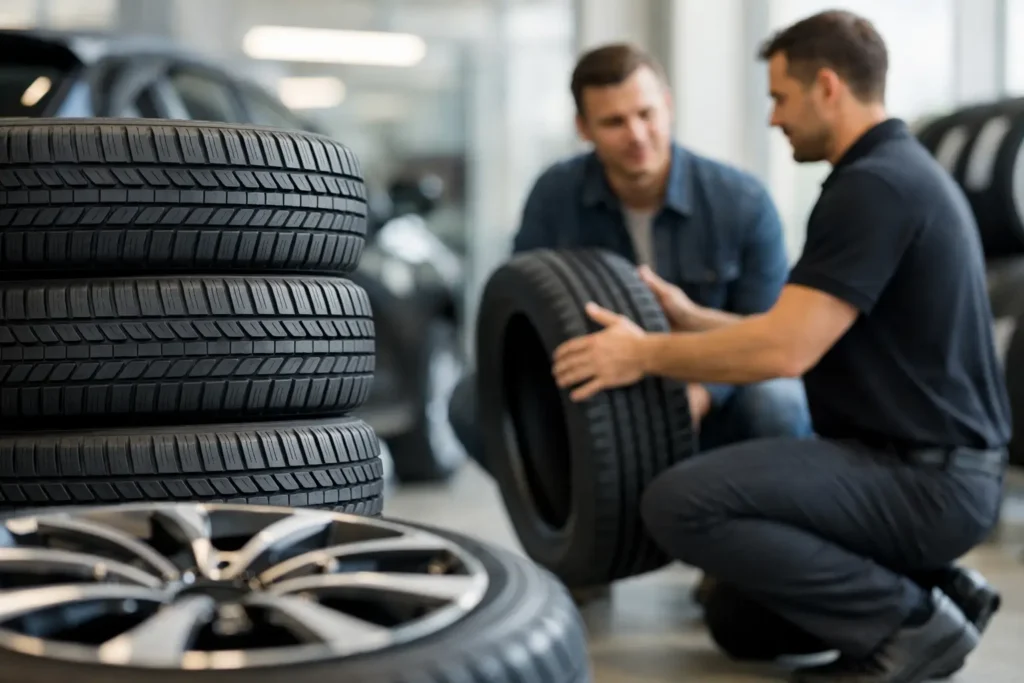
A lot of tire decisions get made the wrong way – by price alone, by whatever is in stock, or by a salesperson pushing the set with the highest margin. A better tire buying guide for drivers starts with one simple question: what does your vehicle actually need for the way you drive, where you drive, and what Minnesota roads throw at you for nearly half the year?
If you commute every day, haul kids around town, drive a pickup for work, or spend winter mornings on snow-packed side roads, the right tire is not just a brand name or a sale tag. It is the difference between confident braking and sliding through an intersection, between even tire wear and replacing a set too early, between a smooth ride and a vibration that never quite goes away.
Tire buying guide for drivers: start with how you use the vehicle
The best place to begin is not the display rack. It is your daily routine. A compact car used mostly for highway commuting needs something different than a half-ton truck pulling a trailer, and both need something different than an SUV that sees school drop-offs, grocery runs, and winter highway travel.
That is why there is no single “best tire” for everybody. Some drivers need ride comfort and long tread life. Others need stronger wet traction, better light-snow grip, or a tougher casing for heavier loads. If you mostly drive around Elk River and nearby roads, winter traction should carry more weight in the decision than it might for a driver in a warmer climate.
This is also where tire type matters. Touring tires often ride quietly and wear well. Performance tires sharpen handling but may wear faster and struggle more in cold weather. All-terrain tires can make sense for trucks, but some are louder on pavement and not every aggressive-looking tread actually performs well on snow and ice.
What matters most when comparing tires
Price matters. It just should not be the only thing that matters.
A cheap tire can cost more in the long run if it wears out quickly, rides poorly, or does not hold traction when you need it. A more expensive tire is not automatically better either. What matters is whether the tire fits your vehicle, your driving habits, and the road conditions you deal with most.
Start with the basics: correct size, proper load rating, and speed rating that meets your vehicle’s requirements. After that, look at tread design, traction in wet and winter conditions, expected tread life, road noise, ride quality, and warranty support. Those details affect everyday driving far more than a flashy sales pitch.
For drivers in Minnesota, tread pattern deserves special attention. Open shoulder tire designs are often the better choice for winter traction because they help evacuate slush, snow, and water more effectively. That added bite on packed snow and messy roads can make a real difference for cars and trucks. If you want a better sense of how tread patterns affect traction, Joe’s All Tire covers more on that in the knowledge center.
The tread question most drivers overlook
A lot of people shop by brand and never look closely at the tread itself. That is a mistake.
Tread design affects how a tire clears water, grips snow, handles corners, and responds under braking. In our area, where snow and ice hang around for roughly five months, open shoulder designs are worth serious consideration. They create more channels for snow and slush to move out of the contact patch, which helps the tire keep grabbing instead of packing up.
That does not mean the most aggressive tread is always the right answer. More open designs can sometimes bring a little more road noise or a different ride feel, depending on the tire. But for many local drivers, especially those who drive early mornings, rural roads, or winter highways, the trade-off is well worth it.
If a tire looks great online but is weak in the conditions you actually drive in, it is the wrong tire no matter how good the rebate looks.
All-season, all-weather, or winter tires?
This is one of the biggest decision points in any tire buying guide for drivers, and the honest answer is that it depends.
All-season tires work well for many people, especially if you want one set year-round and mostly drive maintained roads. But all-season does not mean strong in severe winter conditions. Some are decent in light snow. Some are not.
All-weather tires are a better fit for drivers who want year-round use with stronger winter capability. They can be a smart middle ground for families and commuters who do not want a dedicated winter set but still need more confidence when roads turn ugly.
Dedicated winter tires are still the strongest option for maximum cold-weather traction. If your schedule does not allow you to stay home during storms, or if your route includes untreated roads and early morning driving, winter tires may be worth the extra seasonal swap.
The right answer comes down to how much winter performance you need, how much road noise or tread wear you are willing to accept, and whether you want one set or two.
Do not ignore ride quality and noise
A tire can be safe and still be a bad fit for your vehicle if it makes the ride harsh or noisy. This comes up a lot with trucks, SUVs, and drivers tempted by aggressive tread patterns.
Some tires are built for durability and traction but give up a little comfort. Others are tuned for a smoother, quieter highway ride. Neither approach is wrong. It just depends on what matters more to you.
If you spend a lot of time on Highway 10 or daily pavement miles, a quieter touring-style tire may make more sense. If you need stronger traction in winter or on rougher surfaces, a slightly firmer or louder tire may be the better call. Honest tire advice means talking through those trade-offs instead of pretending one tire does everything perfectly.
The cheapest option is not always the best value
Used tires can make sense in some situations, especially for drivers trying to solve a short-term budget problem. But they need to be inspected carefully for age, tread depth, previous repairs, and overall condition. A low upfront price is only a good deal if the tire is safe and has enough life left to justify the cost.
The same goes for bargain new tires. If the tread wears quickly or the tire performs poorly in rain and snow, the savings disappear fast. Better value usually comes from buying the right tire once, having it installed correctly, and keeping up with rotations, air pressure, and alignment checks.
That is where a local shop can save you money without cutting corners. A good recommendation is not about selling the highest-priced set. It is about matching the tire to the job and helping it last.
Installation matters more than most people think
Even a good tire can perform badly if the installation is sloppy.
Mounting, balancing, torque specs, air pressure setup, and TPMS service all matter. If a wheel is not balanced correctly, you may feel vibration and assume the tire is defective. If inflation is off, wear can start early. If an alignment issue is ignored, a new set can get chewed up long before it should.
That is one reason many drivers prefer working with a shop where the recommendation and the workmanship are tied together. At Joe’s All Tire, locals know All Tire for that owner-led, done-right approach – the kind where the goal is not to move cars through the bay as fast as possible, but to make sure the tire choice and the installation both make sense.
A smarter way to shop for tires
Before you buy, know your current tire size, think about your real driving conditions, and be honest about what you want more of – longer life, better winter grip, lower cost, quieter ride, or heavier-duty performance. Most drivers are balancing several of those, not just one.
Then ask better questions. How does this tire handle in wet weather? Is the tread design good in slush? Will it ride stiff? Is it a strong choice for a light truck? What kind of wear should you realistically expect? Those answers tell you much more than a discount sign ever will.
A good tire purchase should feel clear, not confusing. You should understand why a tire is being recommended and what trade-offs come with it. That is how you avoid overpaying, underbuying, or ending up with a set that never quite feels right on your vehicle.
The best tire is usually not the one with the loudest marketing. It is the one that fits your vehicle, your roads, and your season of life – and gives you confidence every time you pull out of the driveway.