

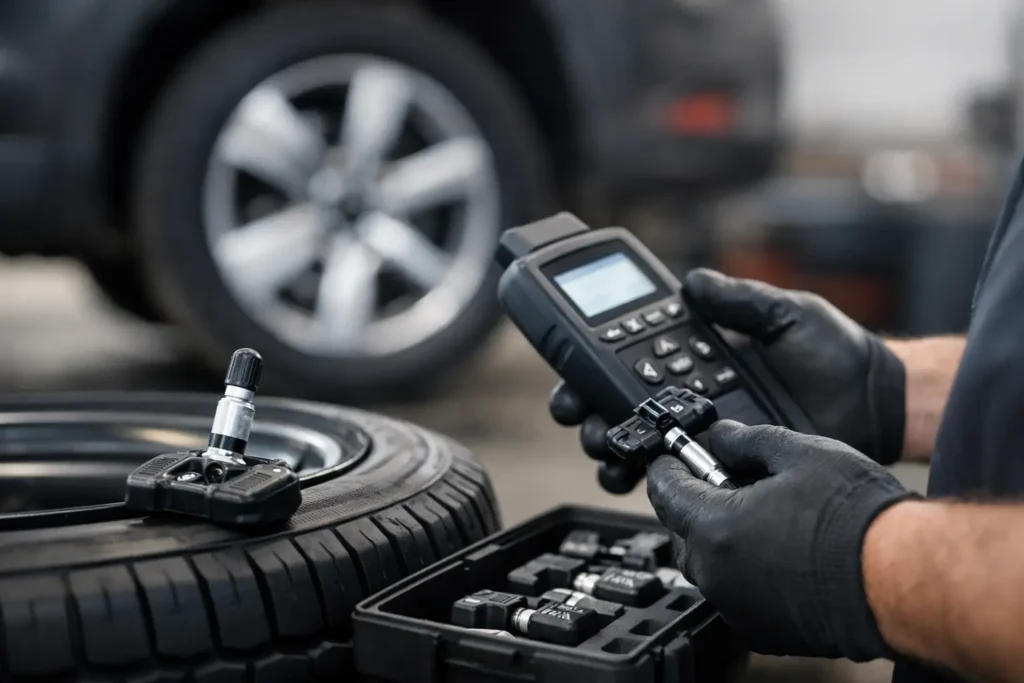
That TPMS light usually shows up at the worst time – cold morning, low tire, busy schedule, and now you’re wondering whether it’s just air pressure or a sensor issue. This guide to TPMS sensor programming is meant to clear that up in plain English, so you know what the light means, when programming is actually needed, and why the job has to be done correctly.
What TPMS sensor programming actually means
TPMS stands for Tire Pressure Monitoring System. The sensors are usually mounted inside the wheel and send tire pressure data to your vehicle. When one sensor stops communicating, gets replaced, or the vehicle doesn’t recognize it after tire service, programming may be needed so the system can identify the sensor and report pressure properly.
A lot of drivers use the word “programming” to mean any TPMS fix, but there are a few different jobs that get lumped together. Sometimes the sensor needs to be registered to the vehicle. Sometimes the sensor needs to be cloned from the old one. Sometimes the car just needs a relearn procedure so it knows where each sensor is located. And sometimes the issue isn’t programming at all – it’s a dead sensor, corrosion, damage, or the wrong part.
That’s where people get tripped up. A warning light doesn’t always mean the same repair.
Why a guide to TPMS sensor programming matters
On paper, TPMS sounds simple. In the bay, it depends on the vehicle, the sensor type, the year, and what work was already done. Some vehicles are straightforward. Others are picky and require the right scan tool, the correct sensor protocol, and a technician who knows the difference between a relearn and a replacement.
This is one reason drivers get frustrated after visiting a chain store or buying sensors online. The parts may physically fit, but that doesn’t mean the vehicle will communicate with them properly. This Isn’t Walmart. When TPMS work is done right, it starts with confirming the problem before throwing parts at it.
If you’re trying to decide whether you need a sensor, a relearn, or a full diagnostic, we can help you sort that out quickly. Just tap the blue phone call button in the lower left corner – we’re just a call away.
When TPMS programming is usually needed
The most common time programming comes up is after a sensor replacement. TPMS sensors have internal batteries, and those batteries don’t last forever. Once one dies, the sensor usually gets replaced as a complete unit. After that, the new sensor often needs to be programmed or relearned to the vehicle.
It also comes up when you install a second set of wheels, like winter wheels. In Minnesota, that’s common. If your seasonal wheel set has different sensors, the vehicle may need to learn those IDs. Some vehicles handle that automatically after driving. Others do not.
Programming may also be required after rotating tires on certain vehicles, especially if the system displays individual tire locations. And if someone installed a universal sensor without setting it up correctly first, the light may stay on even though the sensor is brand new.
Not every TPMS problem is a programming problem
This is where honest diagnosis matters. A TPMS light can come on because one tire is actually low. It can also come on because of a weak sensor battery, signal interference, damaged hardware, or a mismatch between the sensor and the vehicle.
We’ve seen plenty of cases where the issue wasn’t the sensor people thought it was. One bad sensor can trigger confusion, but so can rust around the valve stem, service damage during tire installation, or a previous repair that used the wrong setup process. Good TPMS service starts with testing all four sensors, checking pressure manually, and confirming what the module is or isn’t seeing.
That matters for safety, but it also matters for your wallet. Replacing parts you don’t need is frustrating. So is driving around with a warning light you’ve learned to ignore.
How TPMS sensor programming is done
Step 1: Verify the fault
The first step is scanning the system and checking each sensor. A technician looks for whether the sensor is transmitting, whether the battery is still alive, and whether the vehicle recognizes the sensor ID.
Step 2: Confirm the right sensor type
Not every sensor works on every vehicle. Some are OEM-specific. Some are multi-application programmable sensors. The correct part has to match the vehicle’s frequency and communication protocol.
Step 3: Program or clone the sensor if needed
With many aftermarket sensors, the new sensor has to be programmed before installation or before the relearn process. In some cases, the old sensor ID can be copied to the new one. In others, a new ID is created and then introduced to the vehicle.
Step 4: Perform the relearn
This step tells the car what sensors are present and, on some vehicles, where each one is located. Depending on the make and model, that may require a scan tool, a specific driving procedure, or activating sensors in a certain order.
Step 5: Confirm the repair
A proper job ends with verification. The warning light should go out, the system should show accurate readings if the vehicle displays them, and the technician should make sure all tires are set to the correct pressure.
Where DIY goes wrong
There are some maintenance jobs that are fine for do-it-yourself drivers. TPMS can be hit or miss. The biggest problem is that people buy sensors online based on price, not compatibility, then assume a tire shop can just “sync them up.”
Sometimes that works. Sometimes it turns into paying twice.
The other issue is tool access. Basic code readers usually won’t handle TPMS functions. Even with a sensor tool, the process still depends on having the right software and knowing the relearn procedure for that specific vehicle. That’s why TPMS work often looks easier on video than it is in real life.
And if the tire is already off the wheel, it’s worth doing the job carefully. Sensor seals, stems, cores, and hardware all matter. Little mistakes can turn into slow leaks or repeat visits.
Why local drivers should care before winter hits
In this part of Minnesota, temperature swings are hard on tire pressure. A small drop in temperature can trigger a low-pressure light even when the tire doesn’t have a puncture. That’s normal. But when the light stays on because the sensor system isn’t working, you lose the ability to tell the difference between a seasonal pressure change and a real problem.
That’s not a small issue when roads are covered in snow, slush, or freezing rain for months. Proper inflation affects handling, braking, tread wear, and traction. And while TPMS doesn’t replace regular inspections, it does give you an early warning when something changes.
The same practical thinking applies when you’re due for tires. Around here, open shoulder tire designs are worth a serious look for both summer rain evacuation and winter traction. If you want more plain-English tire advice beyond TPMS, Joe’s All Tire has a Knowledge Center that covers common tire questions without the chain-store sales routine.
Why proper service matters more than the cheapest price
A lot of TPMS problems start after rushed tire work. Damaged sensors, reused worn hardware, incorrect torque, skipped relearns – those shortcuts save a few minutes but create headaches later. That’s the difference between high-volume service and careful service.
At Joe’s All Tire, or All Tire as a lot of locals call us, the focus is getting it done right the first time. That means checking what’s actually wrong, using the right procedure for the vehicle, and not pretending every warning light has the same answer. For everyday drivers, that’s what honest advice looks like.
There’s also value in having the same shop handle your tires, balance concerns, and TPMS issues together. If you’ve got a vibration, uneven wear, recurring air loss, and a TPMS warning, those things can overlap. One clear diagnosis beats guessing at separate problems.
When to have it checked
If the TPMS light is flashing and then stays on, that usually points to a system fault rather than simple low pressure. If you’ve replaced tires or wheels and the light came on after service, that’s another sign the sensors may need attention. And if one tire keeps reading differently than the others, or not reading at all, it’s time to check the system before it becomes a bigger annoyance.
You don’t need to wait until all four sensors fail. In fact, catching one weak sensor early can save hassle, especially if you’re already having tire work done.
A good TPMS system won’t make your vehicle perfect, but it will give you better information when something’s off. And when the warning light means what it’s supposed to mean, you can make smarter decisions without guessing. If your light’s on and you’re tired of wondering whether it’s pressure, a bad sensor, or a setup issue, get it looked at by someone who’ll explain it straight and fix what’s actually needed.