

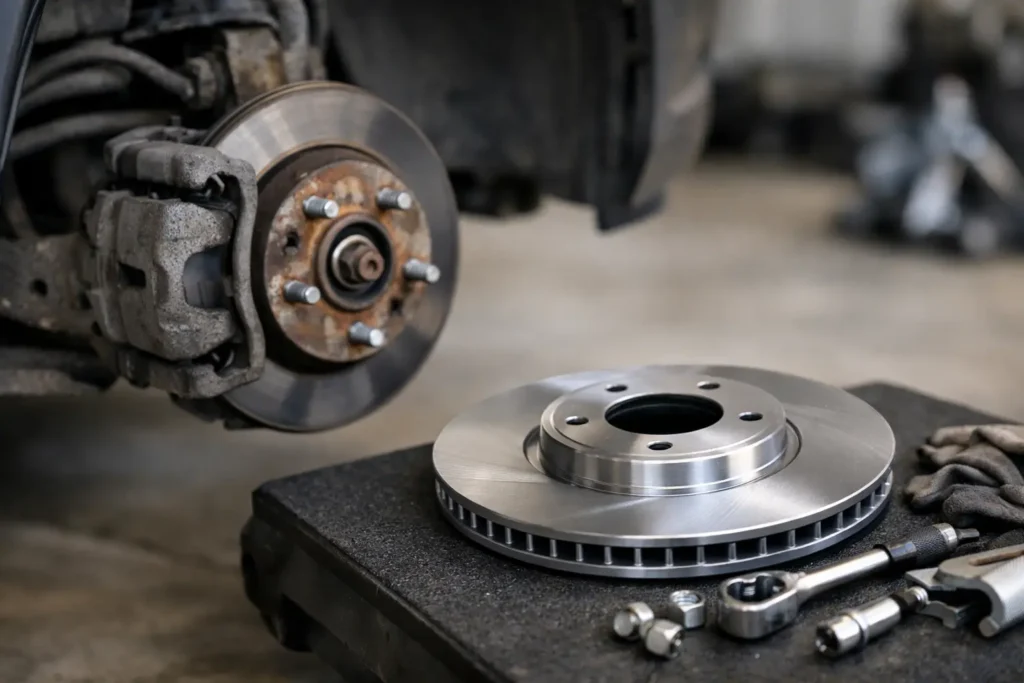
That steering wheel shake when you slow down at a stoplight is usually not your imagination. A lot of drivers put up with it for weeks, thinking it can wait, but brake problems tend to get more expensive the longer they are ignored. This guide to brake rotor replacement is here to help you understand what rotors do, when they need attention, and when replacement is the better call than trying to stretch a worn set a little longer.
Brake work is one of those repairs where guesswork can cost you. If you are hearing grinding, feeling pulsing in the pedal, or noticing your stopping distance getting worse, it makes sense to get a real answer before the damage spreads. If you want a straight recommendation based on what your vehicle actually needs, just tap the blue phone call button in the lower left corner – we’re just a call away.
What brake rotors actually do
Your brake rotors are the metal discs your brake pads clamp onto when you press the pedal. That friction slows the wheels and brings the vehicle to a stop. It sounds simple, but rotors deal with a lot of heat, pressure, and wear every time you drive.
Over time, the surface can become uneven, too thin, heat-checked, or grooved. When that happens, your brakes may still work, but not as smoothly or safely as they should. That is why rotor condition matters just as much as pad condition. Replacing pads without paying attention to the rotors is one of the most common ways brake jobs get done halfway.
Signs you may need brake rotor replacement
Some rotor problems show up clearly, while others are easy to miss until they get worse. The most common clue is vibration when braking. You may feel it in the pedal, the seat, or the steering wheel, especially at higher speeds.
You might also hear scraping or grinding if the pads have worn down enough to damage the rotor surface. In some cases, the vehicle still stops, but it takes more pedal pressure or feels less controlled in a hard stop. A visual inspection can also reveal deep grooves, rust scaling around the braking surface, discoloration from heat, or cracking.
Not every symptom means automatic replacement. Sometimes the issue is pad material transfer, sticking calipers, or worn suspension parts adding to the vibration. That is where proper inspection matters. A brake shake is not always just a brake shake.
Guide to brake rotor replacement vs resurfacing
A lot of drivers ask whether rotors can simply be resurfaced instead of replaced. Sometimes yes, sometimes no. It depends on rotor thickness, condition, heat damage, and how the vehicle is used.
Resurfacing removes a small amount of material to create a clean, even braking surface. That can work if the rotor is still well above minimum thickness and does not have severe grooves, cracks, or hard spots. The downside is that many modern rotors start out thinner than older designs, so there is less material to work with. After machining, some rotors end up closer to their wear limit and may not last as long.
Replacement is often the smarter move when the rotor is already near minimum spec, has heavy rust, has been overheated, or has enough wear that machining would leave too little material behind. For many daily drivers, new rotors also make more sense from a value standpoint because they give the new pads a clean surface and reduce the chance of comeback issues.
At a shop that believes in doing the job right the first time, the answer is not based on what is quickest. It is based on whether the rotor can still do its job safely after repair.
What happens during brake rotor replacement
A proper rotor replacement is more than just swapping parts. The wheel comes off, the brake assembly is inspected, and the old rotor is removed. Depending on the vehicle, that can be straightforward or it can involve dealing with rust buildup, seized hardware, or caliper bracket issues.
The mounting surface behind the rotor needs to be cleaned thoroughly. If rust or debris is left there, the new rotor may not sit perfectly true, which can create vibration even with brand-new parts. The caliper hardware should also be checked and serviced, and the brake pads are usually replaced at the same time unless they are very recent and still in proper condition.
Once the new rotor and pads are installed, everything must be torqued correctly and tested. Bedding in the pads matters too. That process helps transfer an even layer of friction material to the rotor surface so the brakes perform smoothly.
Why rotors wear out sooner on some vehicles
Two vehicles can drive the same roads and still wear rotors at different rates. Driving habits play a big part. Hard braking, towing, stop-and-go traffic, and carrying heavy loads all create extra heat. That heat is what shortens rotor life.
Here in Minnesota, rust is another factor. Road salt and winter moisture can eat away at rotor surfaces and edges, especially on vehicles that sit for stretches or only get short trips. In some cases, rotors need replacement less because they are worn thin and more because rust has compromised the braking surface.
Vehicle design matters too. Some cars and light trucks use rotor materials and sizes that simply wear faster than others. That does not always mean something is wrong. It just means maintenance intervals can vary a lot by make, model, and how the vehicle is used.
Cheap brake parts vs the right brake parts
Not all rotors are built the same. Budget parts can be tempting, especially when you are trying to keep repair costs down, but cheaper rotors are often more prone to noise, uneven wear, and heat-related problems. That does not mean the most expensive option is always necessary either.
The right choice depends on the vehicle and the way you drive. A commuter car used for local errands does not need the same setup as a half-ton truck that hauls regularly. The goal is matching the parts to the job. Honest brake service means recommending what fits your real use, not pushing the highest-priced package.
That is one reason local drivers often prefer a shop where the owner is involved and the advice is direct. You want someone looking at the actual condition of your brakes, not reading from a sales screen.
How to know if your rotor problem is urgent
If the brakes are grinding, pulling hard to one side, or making the vehicle feel unstable in a stop, it is time to get it checked right away. The same goes for a brake warning light, a very soft pedal, or obvious metal-on-metal noise. Those are not wait-until-next-month issues.
A mild vibration with no noise may give you a little more room, but even then, it is smart not to drag it out. Small rotor issues often turn into pad damage, caliper wear, or longer stopping distances if the root cause is left alone.
If you are comparing repair options and want someone to inspect it without the chain-store routine, Joe’s All Tire, known by many locals as All Tire, handles brake inspections and repairs with the same straightforward approach that has earned strong trust in the area. For more about brake service, see www.joesalltire.com/brake-shop-elk-river/.
What brake rotor replacement usually costs
Cost depends on the vehicle, the type of rotor, whether pads are replaced too, and whether there are other issues like seized calipers, damaged hardware, or wheel bearing play affecting the job. Front brakes may cost something different than rear brakes, and some vehicles use more expensive rotor designs than others.
The cheapest estimate is not always the best value. If corners are cut on hardware service, mounting surface prep, or part quality, you can end up paying again sooner than expected. A fair brake quote should reflect complete work, not just low numbers on paper.
That is why inspection matters before price shopping too hard. The same symptom can come from several different causes, and the real fix needs to match the real problem.
When replacement is the smart call
If your rotors are below spec, badly grooved, heavily rusted, heat-damaged, or causing repeat vibration issues, replacement is usually the smart move. It gives the pads a clean foundation, restores braking feel, and reduces the odds of doing the job twice.
There are edge cases. Some newer pads can be reused under the right conditions. Some rotors can be resurfaced safely. Some brake shake complaints turn out to be unrelated to rotor thickness at all. But when a rotor is clearly worn out, trying to save it usually does not save money for long.
Good brake service should leave you with confidence, not a list of what might still be wrong. That matters on dry pavement, and it matters even more when roads are wet, slick, or covered in winter grime.
If your vehicle has started shaking, scraping, or just not stopping the way it should, trust that instinct and get it looked at. Brakes are one of those systems where peace of mind is worth a lot, especially when your family is in the vehicle.
