

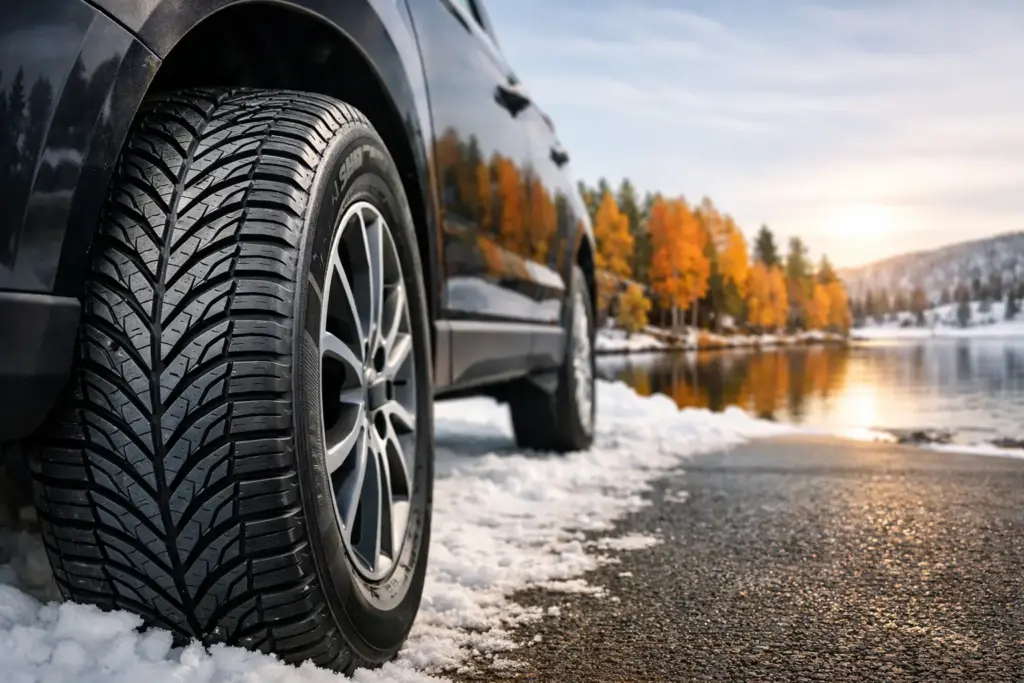
A Michelin CrossClimate tire review matters a little differently in Minnesota than it does in a mild-weather state. Around Elk River, a tire has to handle cold mornings, heavy summer rain, slush, packed snow, and the occasional surprise storm that shows up before you’re ready. The CrossClimate line earns attention because it aims to cover all of that without asking most drivers to change tires twice a year.
At Joe’s ALL TIRE, we look at tires based on how they work on real local roads, not just how they look on a display rack. The Michelin CrossClimate2 is a strong option for many commuters, families, and crossover owners, but it isn’t automatically the right answer for every vehicle or every driver.
Michelin CrossClimate2 Tire Review: The Straight Answer
The Michelin CrossClimate2 is an all-weather tire, which is different from a standard all-season tire. It carries the Three-Peak Mountain Snowflake symbol, meaning it meets a recognized standard for winter traction. That gives it a real advantage over many ordinary M&S (Mud & Snow) all-season tires when temperatures drop and roads get slick.
Its biggest strength is versatility. The directional V-shaped tread is built to move water, slush, and snow away from the contact patch. That helps the tire stay composed in rain while giving it more bite in light to moderate winter conditions than a typical touring all-season tire.
For a driver who wants one quality set of tires for most of the year, the CrossClimate2 is one of the more capable choices available. It rides comfortably, feels stable on dry pavement, and gives drivers added confidence when the forecast turns ugly.
That said, an all-weather tire still has limits. If you drive unplowed back roads before dawn, make frequent winter trips up north, or depend on your vehicle during major snow events, a dedicated winter tire will usually provide stronger ice grip and deeper-snow traction. The CrossClimate2 narrows the gap, but it doesn’t erase it.
Why the Tread Design Works Well Here
Tire design matters more than the label on the sidewall. The CrossClimate2’s directional pattern has deep channels and angled tread blocks that help evacuate water and slush. In practical terms, that can mean less wandering through standing water and more predictable braking when spring thaw turns roads into a mix of puddles and grit.
At ALL TIRE, we often recommend tires with open shoulder designs for Minnesota cars and trucks when the fit is right. An open shoulder gives water and snow more room to escape from the tread, improving traction during summer rain and winter driving. Minnesota can see roughly five months of snow and ice, so that extra evacuation capability isn’t a small detail.
The CrossClimate2 uses a design that does a good job of keeping channels open as conditions change. It isn’t an aggressive off-road truck tread, and it isn’t meant to be. It is designed for everyday highway and city driving where quiet handling, wet grip, and winter readiness all matter.
If you’re comparing tread patterns and aren’t sure what will actually help your vehicle, we can talk through the options based on where and how you drive. Mobile visitors can tap the blue call button in the lower left corner to ask questions or schedule an appointment.
Where Michelin CrossClimate2 Tires Shine
The CrossClimate2 is especially appealing for drivers who don’t want the hassle or storage needs of seasonal tire swaps. It makes sense for vehicles that see a mix of highway commuting, school drop-offs, errands, and weekend driving.
It tends to be a particularly good fit for:
- Sedans and minivans that need dependable wet-weather braking and extra winter confidence
- Crossovers and SUVs used for family travel, commuting, and year-round errands
- Drivers who put on steady mileage and want a refined, long-wearing tire
- People who travel between plowed city roads, suburban streets, and rural highways
On dry roads, the CrossClimate2 generally feels secure and well controlled. In rain, the tread pattern is one of its biggest selling points. Hydroplaning resistance is important because even a careful driver can’t brake or steer effectively if the tire loses contact with the pavement.
Noise and ride quality are also solid for this category. Some aggressive all-weather and winter-focused tires can create more road noise or feel less precise on dry pavement. Michelin has done a good job keeping the CrossClimate comfortable enough for a daily driver.
The Trade-Offs to Know Before You Buy
The main trade-off is price. Michelin CrossClimate2 tires usually cost more upfront than basic all-season tires. For many drivers, the added wet and winter performance is worth it, especially when replacing tires that have become hard, worn, or unreliable. But if a vehicle is driven very little, stays parked during storms, or is nearing the end of its useful life, a lower-cost option may make more financial sense.
Another consideration is fuel economy. Depending on the vehicle and tire size, an all-weather tread can have slightly more rolling resistance than a low-resistance touring tire. For most drivers, that difference is modest, but it is worth discussing if every mile per gallon matters.
The CrossClimate2 also isn’t a replacement for good judgment. Four quality tires help, but they don’t change the stopping distance required on glare ice. Slowing down, leaving room, and keeping proper tread depth are still part of safe winter driving.
And while a single pair of tires may seem like an easy budget choice, we generally recommend replacing tires in complete sets whenever practical. Matching tread depth and tread design helps a vehicle brake, corner, and respond more consistently. On all-wheel-drive vehicles, uneven tire circumference can create added stress on the drivetrain.
Is the CrossClimate2 Right for Your Vehicle?
For many Elk River-area drivers, the answer is yes. It is a premium all-weather tire for someone who wants stronger snow performance than a standard all-season without moving to a dedicated winter setup. It is especially compelling for commuters and families who need to leave the driveway no matter what the forecast says.
But tire selection should start with your vehicle, size, driving habits, and priorities. A pickup that tows a trailer has different needs than a compact sedan. A driver traveling I-94 every day may prioritize road feel and tread life. Someone on gravel roads may need a different casing and shoulder design. The right tire is the one that fits the work your vehicle actually does.
Joe at ALL TIRE takes the time to look at those details. We can inspect your current tread wear, check for alignment or suspension concerns, and make sure the new tires are mounted and balanced correctly. A quality tire can only perform as designed when the installation is done right.
This Isn’t Walmart. Tires aren’t just round black parts that get bolted on and forgotten. They affect braking, steering, ride quality, fuel use, and the safety of everyone in the vehicle. Paying attention to fitment, inflation pressure, and balance is how you get the value you paid for from a premium tire.
FAQ
Are Michelin CrossClimate2 tires good in snow?
Yes, they are notably better in snow than most standard all-season tires. Their Three-Peak Mountain Snowflake rating and directional tread provide useful traction in light to moderate snow, slush, and cold conditions. For frequent travel on deep snow or ice, dedicated winter tires still have the edge.
Are Michelin CrossClimate2 tires all-season tires?
They are better described as all-weather tires. They can be used year-round like an all-season tire, but they meet a higher winter-traction standard than most conventional all-season designs.
How long do Michelin CrossClimate2 tires last?
Tread life depends on the specific CrossClimate model, vehicle weight, alignment, inflation, and driving habits. Michelin is known for strong tread life, but regular rotations and proper inflation are what help any tire last as long as it should. Common real world tread life is reported 55,000 – 70,000 miles, but again, vehicle weight and maintenance are a big factor.
Do I need four Michelin CrossClimate2 tires?
Four matching tires are the preferred setup for balanced handling, braking, and traction. This is especially important on all-wheel-drive vehicles, where major differences in tread depth can cause drivetrain concerns.
Are CrossClimate2 tires worth the higher price?
They can be worth it if you want a comfortable daily-driving tire with strong wet traction and added winter capability. If you plan to keep your vehicle for a decent length of time/miles, they are a GREAT VALUE for all four Minnesots sessons. An honest recommendation starts with your vehicle and how you use it.
A Michelin CrossClimate2 can be a smart year-round choice when you want fewer compromises between dry roads, rain, and Minnesota winter weather. Before replacing your tires, have them checked by someone who will look past the sales pitch and help you choose what will keep your vehicle driving safely.