

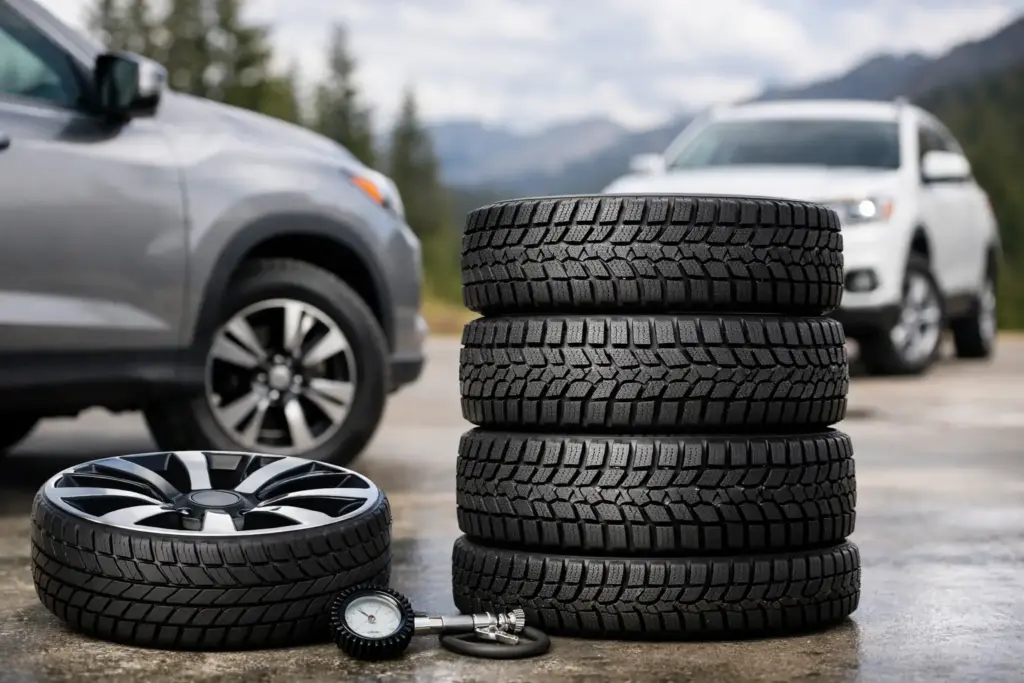
A tire purchase for an all-wheel-drive vehicle is different from buying one replacement tire for a front-wheel-drive sedan. On an AWD vehicle, the tires work as a set to help the drivetrain distribute power properly. If one tire is significantly different in size, tread depth, or overall circumference, it can make the vehicle work harder than it should. That matters on Minnesota roads, where snow, slush, rain, potholes, and long commutes can expose a weak tire setup fast.
At Joe’s ALL TIRE, locally known as ALL TIRE, we help drivers make tire decisions based on how they actually drive, not just what happens to be on a shelf. The right choice protects traction, ride quality, tire life, and the expensive AWD components underneath your vehicle.
Why AWD Tire Purchases Need More Attention
All-wheel drive can send power to more than one axle, giving the vehicle extra help when roads are slick. But AWD doesn’t create grip on its own. Your tires are still the only parts of the vehicle touching the road. If the tread is worn, the rubber is too hard, or the tires don’t match closely enough, AWD can’t do its job the way it was designed to.
Most vehicle manufacturers set a limit for how much tread-depth difference is acceptable between tires. The exact number depends on the vehicle, but it’s often a small amount. A new tire next to three tires that are well worn may have a larger rolling circumference. That difference can keep the AWD system compensating as you drive, which may add wear to the transfer case, center differential, or other drivetrain components.
That’s why an AWD tire purchase should start with a simple question: are the other three tires still close enough in tread depth and condition to keep? If they are, a single replacement may be reasonable. If they aren’t, replacing all four is often the safer and less costly choice over time.
When One Tire Is Enough and When It Isn’t
A damaged tire doesn’t automatically mean you need four new tires. If your remaining tires have plenty of usable, even tread and are within your manufacturer’s allowed difference, one matching tire may work. The replacement should be the same size, the same model, and same tread pattern and construction.
The situation changes when the other tires are worn, mismatched, or near replacement time anyway. Putting one new tire on an AWD vehicle with three worn tires can create a circumference difference that isn’t worth the risk. In some cases, tire shaving may be an option to bring a new tire closer to the tread depth of the others, but that depends on the tire, availability, and the vehicle’s specifications.
Before spending money, have the tread measured rather than guessing by appearance. ALL TIRE can inspect all four tires, check for uneven wear, and give you a straight answer about whether one, two, or four tires make sense. If you’re weighing your options and want a quick answer from someone who works on these vehicles every day, tap the blue call button in the lower left corner on mobile – we’re just a call away.
Match More Than the Tire Size
The size printed on the sidewall is only part of the story. An AWD vehicle benefits from tires that match in several ways:
- Tire size, including width, aspect ratio, and wheel diameter
- Brand and model
- Tread pattern and tread depth
- Load index and speed rating
- Seasonal purpose, such as all-season, all-weather, or winter driving
A tire can have the same basic size as the others but still behave differently if its tread design, construction, or wear level is far off. Mixing tire types can also change how the vehicle handles in rain, braking situations, and snow. That may not be obvious while driving around town on dry pavement, but it becomes obvious when you need traction most.
This is also why rotating tires on schedule matters. Regular rotation helps the tires wear more evenly, which gives you more replacement options later. Skipping rotations can leave one axle much more worn than the other, making an eventual AWD tire purchase more complicated.
Open Shoulder Tires Make Sense in Minnesota
For Elk River drivers, traction isn’t only about the first snowstorm. We get months of slush, standing water, packed snow, ice, gravel, and spring rain. ALL TIRE strongly recommends open shoulder tire designs for cars and trucks because the channels near the outside edge of the tread help move water, slush, and loose material away from the contact patch.
An open shoulder design can improve wet-road confidence in summer and give the tire more bite in winter conditions. It’s a practical feature for Minnesota driving, especially for commuters, families, and pickup owners who don’t get to choose perfect road conditions.
That doesn’t mean every aggressive-looking tire is the right answer. More open tread can sometimes create more road noise or affect ride feel. The right balance depends on your vehicle, whether you drive mostly highway miles, and how much snow or gravel you regularly deal with. A quiet touring tire may suit one driver, while a more capable all-weather or light-truck tire may suit another.
When comparing options, look for a true M&S rating where appropriate, but remember that M&S alone doesn’t mean a tire performs like a dedicated winter tire. The tread design, rubber compound, and your driving habits all matter.
Don’t Let Price Be the Only Deciding Factor
Everyone wants a fair price. That’s reasonable. But the cheapest tire at the time of purchase can cost more if it wears quickly, handles poorly in rain, or forces an early replacement that leaves your AWD system with mismatched tires again.
At ALL TIRE, we’ll explain the difference between tire options without steering you toward something you don’t need. Sometimes a dependable mid-range tire is the smart value. Other times, a higher-quality tire with stronger wet traction, longer wear, and a better warranty makes more sense for the miles you drive. The goal is to buy once and buy right.
“This Isn’t Walmart” is more than a line when it comes to tire service. Tires need correct mounting, balancing, inflation, and TPMS attention. A good tire can still ride poorly if the installation work is rushed. If you’ve had a vibration after a recent tire purchase, don’t ignore it. It could be a balance issue, a bent wheel, a tire concern, or a mechanical problem such as a wheel bearing.
Ask These Questions Before You Buy
A clear conversation saves money and prevents surprises. Before choosing tires for an AWD vehicle, ask whether all four should be replaced, what the current tread depths are, whether your preferred tires have an open shoulder design, and whether the tires fit your normal driving conditions.
Also ask about the warranty, expected tread life, rotation schedule, and whether your vehicle has any alignment or suspension issue causing uneven wear. New tires installed on a vehicle with an unresolved alignment problem can wear down long before they should.
Joe works on-site daily, and that owner-led attention matters when the answer isn’t obvious. You deserve practical advice based on the vehicle in front of us, not a one-size-fits-all sales pitch.
Frequently Asked Questions
Do I have to replace all four tires on an AWD vehicle?
Not always. If the remaining tires have enough tread and are close enough in depth to the replacement tire for your vehicle manufacturer’s limits, one tire may be acceptable. If the tread difference is too large, replacing four tires is usually the better move to protect the AWD system.
Can I replace only two tires on my AWD vehicle?
Sometimes, but it depends on the tread depth of the other two tires and your vehicle’s requirements. The new pair should generally be matched, and the full set needs to stay within the allowable tread-depth difference.
Why do matching tires matter on AWD?
Tires with different circumferences rotate at slightly different speeds. Your AWD system may constantly compensate for that difference, which can create unnecessary drivetrain wear over time.
Are all-season tires good enough for Minnesota winters?
They can work for many drivers, especially with good tread depth and an open shoulder design. But drivers who face frequent snow-covered roads, steep driveways, or early-morning ice may benefit from dedicated winter tires. It depends on where and when you drive.
How often should AWD tires be rotated?
Follow your vehicle owner’s manual, but many vehicles benefit from rotation about every 5,000 to 7,500 miles. Regular rotations help maintain even tread depth, improve tire life, and keep future replacement decisions simpler.
The right AWD tire setup should give you confidence, not another thing to worry about when the forecast turns ugly. Get the tread measured, choose tires that fit your real driving, and let a shop that values doing it right help you protect the vehicle you depend on.
Can ALL TIRE find me an option for replacing just one tire on my All Wheel Drive vehicle?
Joe’s ALL TIRE can very often find an exact same USED TIRE with same or similar tread depth to work with your good remaining 3 tires. Please call, text, or email us to check, but we do this often. These many times come from out of state and can take a few days to arrive at ALL TIRE Elk River.