

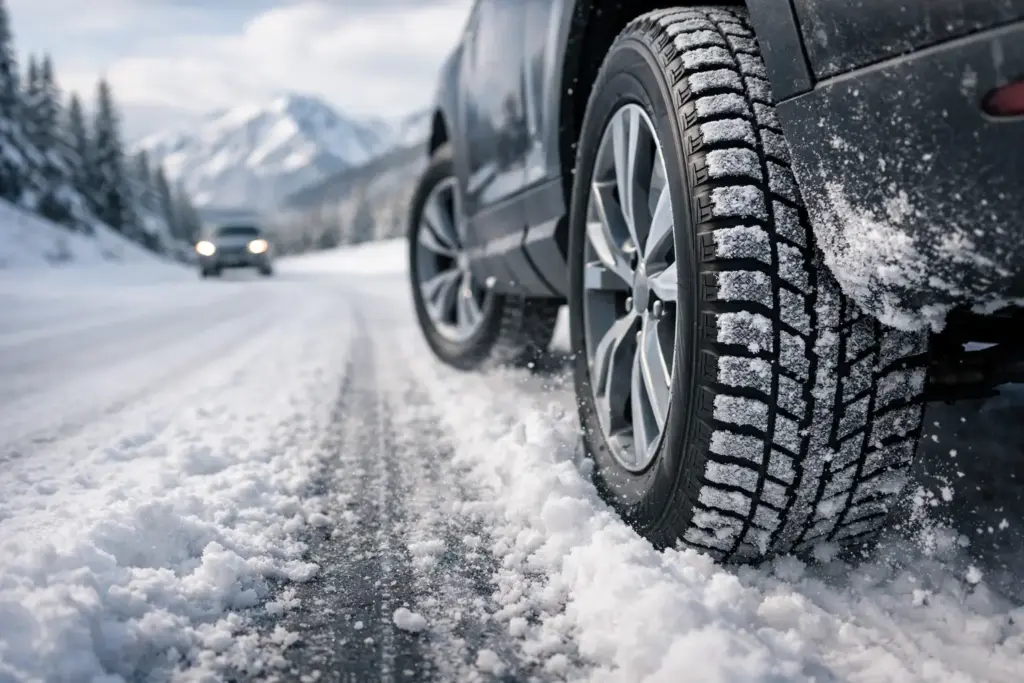
A tire can feel fine on a dry October afternoon and still leave you uneasy at the first icy intersection in January. That’s why a Bridgestone WeatherPeak review snow traction question deserves more than a quick yes or no, especially for Minnesota drivers who deal with roughly five months of snow, slush, ice, and cold pavement.
The WeatherPeak is an all-weather tire, not a traditional all-season tire and not a dedicated winter tire. That distinction matters. It’s built for drivers who need dependable year-round traction but don’t want to schedule a seasonal tire change every fall and spring. At Joe’s All Tire, known locally as ALL TIRE, we see why that convenience appeals to commuters, families, and pickup owners around Elk River. The real question is whether its winter capability matches how and where you drive.
Bridgestone WeatherPeak Snow Traction: The Straight Answer
The Bridgestone WeatherPeak provides legitimately strong snow traction for an all-weather tire. It carries the Three-Peak Mountain Snowflake rating, meaning it has met an industry snow-traction standard beyond the usual M+S marking found on many all-season tires. In normal Minnesota winter conditions – packed snow, light-to-moderate fresh snow, cold dry pavement, and slushy roads – it’s a confident step up from a standard touring all-season.
Its tread uses lots of small gripping edges, called sipes, along with a compound designed to stay more flexible in low temperatures. Those details help the tire bite into snow instead of skating across it. The WeatherPeak also has a directional tread pattern that moves water and slush away from the contact patch, helping it stay composed when winter roads turn messy.
That said, a Three-Peak Mountain Snowflake rating doesn’t make any tire invincible on glare ice. On frozen lakes, polished intersections, steep untreated driveways, or rural roads after a hard freeze, a dedicated winter tire still has the edge. That’s simply the trade-off for getting one set of tires to handle summer, rain, fall, and winter.
Why the Tread Design Matters in Minnesota
Tread design is where a tire earns its keep. Snow traction isn’t just about having deep grooves. The tire needs edges that can grab snow, channels that can clear slush, and a rubber compound that doesn’t become stiff when temperatures drop.
The WeatherPeak’s design does a solid job of managing all three. Its grooves help evacuate water and slush, while the siping creates more working edges on packed snow. For drivers who spend most of their time on plowed roads, this is a practical design that delivers confidence without the softer, noisier feel some people associate with winter tires.
At ALL TIRE, we also pay attention to shoulder design. We strongly recommend open shoulder tire designs for cars and trucks whenever the available fitment makes sense. Open shoulders give water, slush, and loose snow more room to escape instead of getting trapped near the outside of the tread. That can improve wet summer traction as well as winter handling, which is especially valuable when Minnesota roads shift from standing water to slush in the same week.
The WeatherPeak isn’t a deep, aggressive truck tire, and it isn’t trying to be. Its shoulder and groove layout is aimed at balanced passenger-car and crossover performance. For most daily drivers, that balance is a strength. For someone regularly traveling unplowed gravel roads or hauling through deep snow, a more aggressive all-weather or dedicated winter setup may be a better fit.
Where the WeatherPeak Feels Strong
The WeatherPeak makes the most sense for drivers who need a calm, predictable tire in changing conditions. It’s well suited to a daily commuter, a family SUV, a minivan, or a crossover that sees city streets, highways, parking lots, and occasional snow-covered back roads.
On wet pavement, it’s one of the tire’s bigger selling points. Minnesota rain can be just as demanding as snow, particularly during spring thaw and summer storms. The directional pattern helps reduce hydroplaning risk when the tread is still in good condition, and the tire feels stable during normal highway driving.
It also avoids one common downside of dedicated snow tires: a short seasonal operating window. A true winter tire is the right call for maximum winter grip, but it should come off once warm weather arrives. The WeatherPeak can stay on the vehicle through summer, which saves storage space, avoids seasonal swaps, and gives drivers one consistent handling feel year-round.
If you’re unsure whether an all-weather tire is enough for your commute, your vehicle, and the roads you use, we can help you sort it out without pressure. Mobile visitors can tap the blue call button in the lower left corner to ask questions or schedule an appointment.
The Trade-Offs to Know Before Buying
No honest tire review should pretend one product is perfect for everybody. The WeatherPeak’s biggest strength is versatility, and versatility always involves compromise.
First, it won’t equal a dedicated winter tire on glare ice or in deep, unplowed snow. Drivers who travel before plows run, live on steep rural roads, or make long winter trips through northern Minnesota may be better served by a separate winter tire set.
Second, all-weather tires generally cost more upfront than a basic all-season tire. That added cost reflects the winter-capable compound and more complex tread design. Still, the value can make sense when one set of tires helps cover the conditions that would otherwise push you toward seasonal changes.
Third, tire performance changes as tread wears down. Even a great new all-weather tire loses snow capability as its grooves become shallower. A tire that looks acceptable for summer rain may no longer provide the winter confidence you expected. Regular rotations, air-pressure checks, and alignment inspections protect both traction and tire life.
This is where a local shop’s advice matters. “This Isn’t Walmart” isn’t about knocking convenience. It’s about making sure your tire decision is based on your driving habits, vehicle load, tread needs, and budget – not just the lowest price on a screen. Joe is on-site daily at ALL TIRE, and we’ll tell you plainly when the WeatherPeak is a good match and when another option makes more sense.
Is the WeatherPeak Right for Your Vehicle?
For a front-wheel-drive sedan or crossover, the WeatherPeak can be a major upgrade over a conventional all-season tire when winter arrives. For all-wheel-drive vehicles, it adds useful traction, but remember that AWD helps you get moving – it doesn’t magically improve braking on ice. The tires are still doing the stopping and turning.
For light trucks, fitment and use matter more. A pickup driven unloaded through snowy neighborhoods may need a tire with stronger open shoulder characteristics and a more aggressive tread pattern than a WeatherPeak. A truck used mostly as a commuter vehicle, however, may benefit from the WeatherPeak’s quieter road manners and wet-weather performance.
Before installation, we recommend checking more than tire size. We look at your current tread wear, uneven wear patterns, vibration concerns, wheel condition, and tire-pressure monitoring system needs. Proper mounting and balancing are part of the safety equation. A quality tire can’t perform as intended if it isn’t installed correctly.
FAQ
Is the Bridgestone WeatherPeak good in snow?
Yes. It’s a strong all-weather tire with the Three-Peak Mountain Snowflake rating and noticeably better snow capability than many standard all-season tires. It’s a good fit for typical plowed-road Minnesota driving.
Is the WeatherPeak as good as a winter tire?
Not on ice or in severe winter conditions. A dedicated winter tire offers stronger cold-weather grip, especially on glare ice and deeper snow. The WeatherPeak trades some of that extreme capability for year-round usability.
Can I use Bridgestone WeatherPeak tires all year?
Yes. That’s their main purpose. They’re designed to remain on your vehicle through summer heat, rain, fall weather, and winter snow without seasonal tire changes.
How long do WeatherPeak tires last?
Tire life depends on vehicle type, alignment, inflation pressure, driving style, and rotation schedule. Keeping up with routine rotations and correcting uneven wear early gives any tire its fairest chance at a long service life.
Does AWD mean I don’t need winter-capable tires?
No. AWD can help acceleration, but it doesn’t replace snow-capable tires when you need to brake or turn. Good tread and the right rubber compound are still what help your vehicle maintain control.
A WeatherPeak can be a smart, practical answer for drivers who want one tire to handle a real Minnesota year. The right choice comes down to being honest about your winter routine, then fitting a tire that keeps you comfortable when the forecast gets ugly.
