

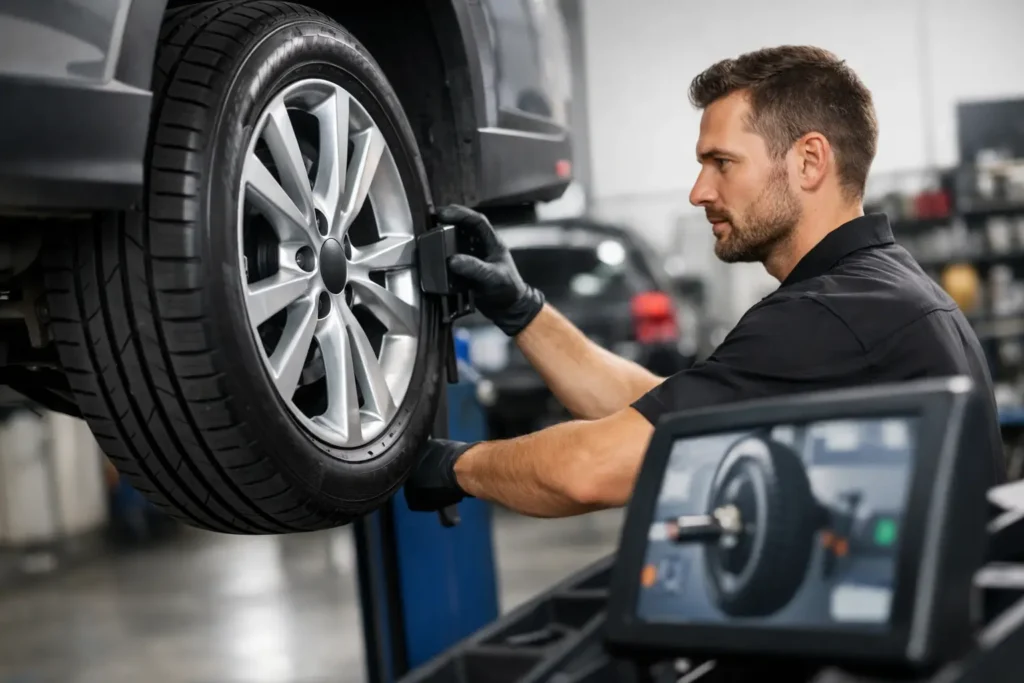
A steering wheel that starts shaking at 55 mph usually is not “just one of those things.” Tire vibration is your vehicle telling you something is off, and the longer you wait, the more likely it is to turn a simple fix into uneven tire wear, suspension stress, or a repair bill that did not need to happen. If you are trying to figure out how to fix tire vibration, the key is not guessing. It is finding the actual cause.
How to fix tire vibration starts with the symptom
Not every vibration comes from the same problem. The speed where it happens, where you feel it, and whether it changes while braking all matter.
If the steering wheel shakes, the issue often points to the front tires, front wheel balance, or a front-end component. If the seat or floor vibrates, rear tires are often involved. If the vibration gets worse only when braking, warped rotors or brake issues move higher on the list. And if it shows up at one speed range but smooths out above or below that range, tire balance is one of the first things to check.
That is why the right repair starts with a real diagnosis. Tire vibration can come from the tires, wheels, suspension, brakes, wheel bearings, or even how the tire was mounted in the first place. Replacing parts blindly is where people waste money.
The most common causes of tire vibration
Tire balance problems
This is the most common cause, and it is also one of the easiest to correct. As a tire rotates, weight needs to be distributed evenly around the wheel and tire assembly. If it is not, you feel a shake at certain speeds, usually highway speeds.
A proper balance job should be done with clean mounting surfaces, accurate machine calibration, and attention to how the tire sits on the wheel. A quick balance can help, but a precise balance is what solves the problem instead of masking it.
Bent wheel or damaged tire
A pothole strike can leave a wheel slightly bent or create internal tire damage that is not always obvious at a glance. Sometimes the tire still holds air and the tread looks usable, but the tire is no longer rolling true.
You may notice a hop, a rhythmic shake, or a vibration that balancing does not fully correct. In that case, the shop should inspect for wheel runout, broken belts, bulges, flat spots, or impact damage.
Uneven tire wear
Cupping, feathering, and chopped tread can all create vibration. Sometimes the wear pattern is the result of missed rotations. Sometimes it points to alignment issues or worn suspension parts.
This is also where tire design matters. In Minnesota, where snow and ice stick around for months, we often recommend open shoulder tires for better winter traction on cars and trucks. They do a better job clearing slush and biting into loose snow, but like any tire, they still need proper inflation, rotation, and alignment to wear evenly. If you want to better understand tread design and seasonal tire choices, our tire knowledge center is a good place to start.
Alignment or suspension issues
A tire can be perfectly balanced and still vibrate if the suspension is not holding it steady on the road. Worn tie rods, bad struts, loose ball joints, or alignment problems can all create shake and irregular tire wear.
This is where “it depends” really matters. If balancing fixes the vibration only for a short time, or if your tires keep wearing unevenly, the balance may not be the root problem. It may just be the symptom you noticed first.
Brake rotor problems
Drivers often describe any shake as a tire vibration, but if it mostly happens when you press the brake pedal, brake rotors may be the issue. That vibration usually comes through the steering wheel or pedal during braking, not while cruising steadily.
Wheel bearing issues
A failing wheel bearing can cause vibration, noise, or a loose feeling while driving. It is not as common as a balance issue, but it is more serious if ignored. Bearings affect both safety and tire wear, so they should be checked when the symptoms point that direction.
How to fix tire vibration without wasting money
The smart approach is to rule out the simple stuff first, then move deeper only if needed.
Start with tire pressure. An underinflated or overinflated tire can wear badly and ride poorly. Check all four tires when they are cold and compare them to the vehicle placard, not just the number printed on the tire sidewall.
Next, inspect the tread. Look for uneven wear, scalloping, bulges, exposed cords, or anything that suggests impact damage. If one tire looks noticeably different from the others, that matters.
Then think about timing. Did the vibration start after new tires were installed? After hitting a pothole? After rotating tires? Right after brake work? Those details help narrow the problem down fast.
If the tires have not been balanced recently, have them road-tested and checked. But do not stop there if the shake continues. A good shop should inspect the wheels, look at the wear patterns, and check the front-end and brake system when the symptoms do not match a simple balance issue.
When balancing is enough, and when it is not
A lot of vibrations are fixed with proper balancing. That is the good news. The bad news is some vehicles get balanced more than once because the first balance was rushed or because the tire itself has a structural problem.
If the vibration shows up only between about 50 and 70 mph, and there are no unusual noises, no braking pulse, and no visible tire damage, balancing is a reasonable first step. If the vibration is constant, severe, or paired with pulling, clunking, humming, or uneven tread wear, expect the fix to involve more than balance weights.
That is also why the cheapest answer is not always the least expensive one. Paying for repeated quick fixes costs more than diagnosing it correctly once.
Can tire rotation fix vibration?
Sometimes, but not in the way people hope.
Rotation can move the problem from the steering wheel to the seat, or make a wear pattern less noticeable for a while. It can also help you identify whether the vibration is tied to a specific tire position. But rotation by itself does not repair a bad tire, bent wheel, worn bearing, or alignment problem.
If your tires are wearing unevenly, rotation is still important as part of prevention. It just is not a cure for an existing mechanical issue.
How winter roads make vibration problems worse
Around Elk River, winter roads are hard on tires and wheels. Potholes show up fast, packed snow hides impacts, and cold temperatures reduce tire pressure. A tire that felt fine in the fall can start vibrating in January because of pressure loss, tread wear, or wheel damage from rough roads.
This is one reason we talk so much about tire choice. Open shoulder tires are a strong option for Minnesota drivers because they provide better winter traction and slush evacuation than more closed tread patterns. But even the right tire will not ride properly if it is out of balance, worn irregularly, or mounted on a damaged wheel.
When to stop driving and get it checked
A mild vibration that appears only at one speed may not be an emergency, but it should still be inspected soon. If the vibration is getting worse, the steering feels loose, the vehicle pulls, you hear grinding or humming, or you see a bulge in the tire, do not put it off.
Those signs can point to a safety problem, not just a comfort issue. Tires, brakes, bearings, and steering parts all work together. When one part is off, the rest of the vehicle usually pays for it.
At Joe’s All Tire, or All Tire as many locals know us, this is exactly the kind of issue that should be diagnosed with a careful look instead of a sales pitch. Sometimes the fix is simple. Sometimes it is not. Honest advice means telling you which one you are dealing with.
The right fix is the one that matches the real cause
If you want to know how to fix tire vibration, start by paying attention to when it happens and resist the urge to assume it is always just a balance issue. Tire vibration is one of those problems where the details matter. Speed, wear patterns, road impact history, and brake behavior all point to the answer.
A smooth ride is not about luck. It comes from tires in good condition, wheels that run true, and repairs done right the first time. If your vehicle is shaking, listen to it now, before the tread wears out early or a small problem turns into a bigger one.