

The first icy morning usually exposes problems that felt minor in October. A tire with marginal tread, a slow leak, a weak battery, or a steering vibration can turn an ordinary Elk River commute into a white-knuckle drive. Proper winter tire preparation gives you time to deal with those issues before the first real storm fills the roads with snow, slush, and packed ice.
At Joe’s ALL TIRE, locals know they can talk directly with someone who works on vehicles every day, not someone reading from a sales screen. Winter driving asks more from your tires, brakes, and suspension than summer driving does. The goal isn’t to buy parts you don’t need. It’s to make sure the parts you depend on are ready when conditions get ugly.
Start winter tire preparation with tread
Tread depth matters all year, but it matters more when Minnesota roads are wet, snowy, or slushy for months at a time. Tread channels water and slush away from the contact patch so the tire can hold the road. As the tread gets shallow, that ability drops off quickly.
A quick penny test can offer a basic answer, but it doesn’t tell the whole story. A tire may still be legal yet be a poor choice for another winter, especially if the wear is uneven or the rubber is aging. Look closely at all four tires for cracked sidewalls, bulges, exposed cords, nails, and sections worn smoother than the rest of the tread.
Uneven wear is usually a warning that something else needs attention. Inside-edge wear can point to alignment trouble. Cupping can be related to worn suspension components or a balance issue. A vibration that begins around highway speed may be a wheel balance problem, a bent wheel, or something more involved. Ignoring it through winter can make the vehicle less predictable and wear out a good set of tires early.
Why open shoulder tires are worth discussing
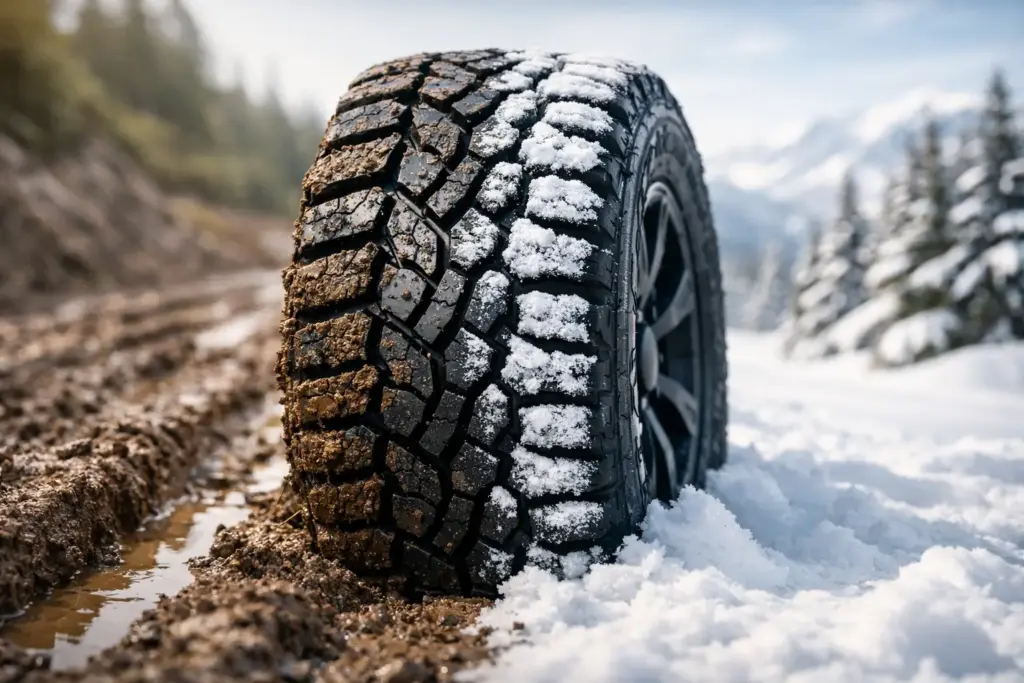
For many cars, SUVs, pickups, and light trucks around Elk River, open shoulder tire designs are a smart choice. The wider, more open channels near the outside of the tread help move water, snow, and slush away instead of trapping it beneath the tire. That can improve traction in heavy summer rain and in the messy winter mix we deal with so often.
Open shoulder designs aren’t a magic solution. Tire size, vehicle type, driving habits, tread compound, and overall tread depth all matter. But when you’re comparing quality tire options, this design feature deserves a real conversation. It’s especially useful for drivers who spend time on highways, rural roads, job sites, or unplowed side streets.
An M&S marking is common on many all-season tires, but it doesn’t automatically make a tire equal to a dedicated winter tire. If your vehicle sees frequent packed snow, ice, long early-morning commutes, or steep driveways, true winter tires may make sense. For drivers who need dependable year-round performance, a quality all-season tire with an open shoulder design and strong wet-weather performance can be the better fit.
Check tire pressure when temperatures drop
Cold air lowers tire pressure. That’s normal, but it can still create problems if you don’t check it. Underinflated tires can wear faster, respond less sharply, hurt fuel economy, and build more heat. On snowy roads, low pressure doesn’t automatically mean better grip. Your tires need their intended shape and contact patch to work the way they were designed.
Check pressure when the tires are cold, preferably before driving or after the vehicle has been parked for several hours. Use the pressure listed on the vehicle’s driver-door placard, not the maximum PSI printed on the tire sidewall. Check the spare too, if your vehicle has one.
If the TPMS warning light comes on after a cold snap, don’t assume it will take care of itself. It may simply need air, but it could also signal a leak, damaged valve stem, or sensor issue. ALL TIRE can diagnose the cause and give you a straight answer before a small concern becomes a roadside problem.
Don’t separate tire safety from brake safety
Your tires and brakes work as a team. Good tread helps the vehicle maintain traction, while healthy brakes help you control speed without pulling, grinding, or unpredictable pedal feel. Winter is not the season to postpone a brake concern.
Pay attention if you notice any of these signs:
- A brake pedal that feels soft, low, or unusually hard
- Pulling to one side during braking
- Grinding, squealing, or a new scraping sound
- Steering wheel shake when braking
- A vehicle that takes more distance than usual to stop
Some noise may be related to surface rust after damp weather, and some vibration can come from tire or suspension issues rather than the brakes. That’s why a proper inspection matters. Guessing at the cause can lead to replacing the wrong part while the real problem continues.
Make a plan before the first storm
Winter preparation works best when it’s handled before every shop is booked with emergency tire problems. If your current tires are near the end, replacing them before the snow arrives gives you more choices and avoids the pressure of making a rushed decision during a storm week.
If you’re unsure whether your current tires have another winter in them, bring the vehicle in for an honest look. Joe at ALL TIRE can assess tread, wear patterns, pressure, and any vibration or braking symptoms you’ve noticed. If you’re on your phone and want to get an answer before heading over, tap the blue call button in the lower left corner to ask questions or schedule an appointment. We’re just a call away.
This isn’t Walmart. Tires aren’t just a box to pull from a shelf and install as fast as possible. Correct tire selection, careful mounting and balancing, proper torque, and attention to the vehicle’s condition all affect how it drives when the roads are slick. A lower upfront price can become expensive if the tire doesn’t fit your needs, wears poorly, or is installed without the care your vehicle deserves.
A practical winter readiness check
Before winter settles in, take a few minutes to look beyond the tires. You don’t need to turn your driveway into a repair shop, but a basic check can prevent avoidable trouble.
Make sure your wipers clear the windshield without streaking, your washer fluid is rated for freezing temperatures, and your headlights and brake lights are working. Keep an ice scraper, warm gloves, and a small emergency kit in the vehicle. For longer drives, a blanket, flashlight, phone charger, and traction aid are sensible additions.
It’s also a good time to notice how your vehicle starts, steers, and rides. A hard start, loose steering, clunk over bumps, or humming noise that changes with speed may deserve attention before winter weather makes diagnosis and repair more inconvenient.
Winter tire preparation for trucks and SUVs
Pickup and SUV owners sometimes assume four-wheel drive solves every traction problem. It helps you get moving, but it doesn’t create unlimited stopping or cornering grip. Four-wheel drive with worn tires can still slide through an intersection or struggle to stop on packed snow.
Truck owners should also consider how they use the vehicle. An empty pickup can be light over the rear axle, which changes how it behaves on slick roads. Quality tires with suitable tread, correct pressure, and weight distributed properly in the bed can make a noticeable difference. Trailer owners should inspect trailer tire condition, pressure, wheel bearings, lights, and brakes before hauling in cold weather.
FAQ
When should I start winter tire preparation?
Start in early fall, before the first sustained cold weather and before tire appointments become harder to schedule. If you already see shallow tread, uneven wear, or warning lights, don’t wait for snow.
How much tread is enough for winter driving?
Legal tread depth and safe winter tread depth aren’t always the same thing. Tires nearing 4/32 inch deserve a serious evaluation before Minnesota winter, particularly if you drive often in snow or slush.
Do I need winter tires if I have all-wheel drive?
Not always, but all-wheel drive doesn’t replace tire traction. Dedicated winter tires can offer stronger grip for frequent snow and ice driving, while quality all-season tires may suit drivers with lighter winter use.
Why does my TPMS light come on in cold weather?
Cold temperatures lower tire pressure, often enough to trigger the warning light. Check all four tires and the spare against the driver-door placard. If the light returns, have the system and tires inspected.
Should I replace only two tires before winter?
It depends on the vehicle, tire condition, and drivetrain. Replacing all four often provides the most balanced traction, but a technician can explain safe options when only two are needed. The right answer should be based on your actual tires, not a one-size-fits-all sales pitch.
A little attention now can make the next snowy commute feel far less uncertain. Get the vehicle checked while you still have time to choose the right solution, then drive into winter knowing the work was done right.
