

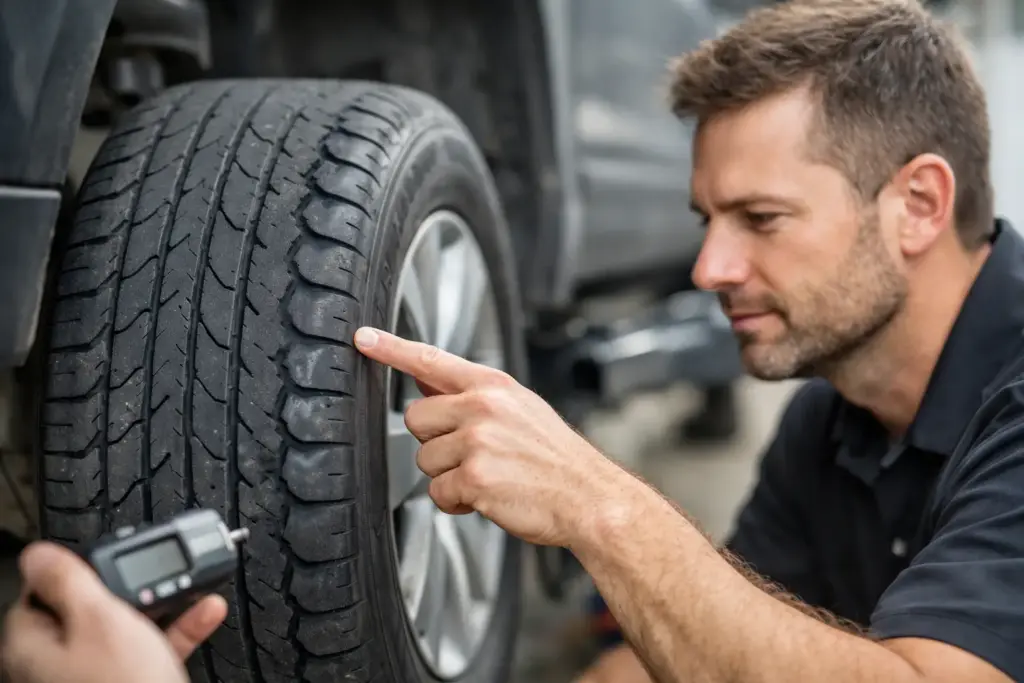
You’re running your hand across the tread and it feels choppy, almost like little raised and lowered steps around the tire. Maybe the vehicle has started humming on the highway, too. That’s a tire cupping diagnosis example many drivers recognize only after the noise becomes hard to ignore. Cupping isn’t just a cosmetic tread issue. It’s a clue that something may be affecting how the tire meets the road.
At Joe’s ALL TIRE, we see this regularly on cars, SUVs, pickups, and trailers around Elk River. ALL TIRE starts with the tire itself, but we don’t stop there. The goal is to find what caused the uneven wear before a new set of tires gets damaged the same way.
What Tire Cupping Actually Looks and Feels Like
Tire cupping, sometimes called scalloping, is uneven wear that appears in repeating dips or hollowed-out patches around the tread. Instead of a tire wearing down smoothly from one end to the other, certain sections wear faster than the sections beside them.
You might notice it first by sound. A cupped tire often makes a low growl, helicopter-like thump, or rough road noise that gets louder with speed. The sound can be mistaken for a bad wheel bearing, especially when the tread pattern is aggressive. Running a flat hand lightly over the tread can reveal the pattern: smooth in one direction, stepped or rough in the other.
Cupping can happen on any tire, but it may be easier to spot on tires with larger tread blocks. That’s why looking closely matters. A tire can have plenty of remaining tread depth and still ride poorly or make excessive noise.
A Tire Cupping Diagnosis Example From the Shop
Here’s a common tire cupping diagnosis example. A pickup comes in with a complaint of a loud hum that started gradually after several thousand miles. The driver assumes the tires are simply getting old because there’s still visible tread left.
During the inspection, the rear tires have alternating low spots across the tread blocks. The front tires look more even, but one front tire has a slight feathered edge. The tire pressure is close to correct, and there’s no obvious tire damage. That tells us the answer probably isn’t just inflation.
Next, we check the balance and inspect the wheels. One rear wheel is slightly out of balance, which can contribute to a repeating bounce at highway speed. We also inspect the suspension and find a weak shock absorber. It isn’t completely failed, but it’s no longer controlling wheel movement the way it should. The tire has been bouncing enough to create the cupped pattern.
In that case, balancing the wheel alone might reduce some vibration, but it won’t correct the worn tread. Replacing the weak shock, correcting the balance, and replacing the damaged tires is the honest repair path. If the tire noise is mild and the tread is still safe, some drivers choose to address the mechanical cause first and monitor the tire. It depends on the severity of the cupping, remaining tread, and how much noise the driver can live with.
What Usually Causes Cupped Tires?
Cupping has more than one possible cause, which is why guessing can get expensive. A fresh alignment doesn’t fix every cupped tire, and a new tire won’t solve a loose steering or suspension part.
The most common contributors include:
- Weak shocks or struts that allow the tire to bounce instead of staying planted on the pavement
- Wheel or tire imbalance that creates repeated vibration at speed
- Worn ball joints, tie rods, control arm bushings, or wheel bearings that let the wheel move where it shouldn’t
- Alignment angles that are out of specification, especially when other uneven wear patterns are present
- Tires that haven’t been rotated on schedule, particularly on heavier front-wheel-drive vehicles
- Incorrect inflation pressure, which can worsen uneven wear even when it isn’t the original cause
Road conditions matter, too. Minnesota potholes, frost heaves, gravel roads, and rough construction zones can speed up wear on suspension components. A hard impact can also bend a wheel or disturb alignment settings. Still, the road isn’t always the whole story. A careful inspection separates normal local wear from a problem that needs repair.
How ALL TIRE Diagnoses the Problem
A proper diagnosis is more than a quick look at tread depth. Joe checks the tire’s wear pattern by feel and sight, then compares all four tires. We look for cupping, feathering, inside-edge wear, center wear, and damage that points toward a specific cause.
From there, the inspection may include tire pressure, wheel balance, wheel condition, suspension movement, steering components, wheel bearings, and alignment-related symptoms. Sometimes the problem is straightforward. Other times, several smaller issues are working together, such as a slightly weak strut and an overdue tire rotation.
If you’re hearing a new hum, feeling a shake, or seeing uneven tread, it’s worth getting answers before replacing tires blindly. Tap the blue phone call button in the lower left corner to ask a question or schedule an appointment – we’re just a call away.
Can You Keep Driving on Cupped Tires?
Mild cupping doesn’t always mean the tire is immediately unsafe, but it does mean the tire deserves attention. The uneven surface can become louder, reduce ride quality, and wear faster once the pattern starts. Severe cupping can affect traction, especially on wet roads, and may leave too little usable tread for safe seasonal driving.
The practical question is whether the tire can still do its job safely. We check tread depth across the tire, inspect for exposed cords or damage, and consider the tire’s age and overall condition. If the underlying issue is fixed early, you may prevent the remaining tires from following the same path.
This Isn’t Walmart. Tires, balancing, and suspension checks aren’t items to rush through because the vehicle and the people in it deserve work that’s done right the first time.
Tire Choice Can Help, But It Won’t Hide a Mechanical Issue
The right tire design can improve traction and handling, but no tire design can overcome worn suspension parts or a bad balance. For local cars and trucks, ALL TIRE strongly recommends open shoulder tire designs when they fit the vehicle and driving needs. Open shoulder patterns help move water away from the tread during summer rain and can provide better traction through Minnesota’s long stretch of snow and ice.
That doesn’t mean every driver needs the same tire. A quiet highway commuter may prioritize road noise and long tread life, while a pickup owner who travels gravel, works outdoors, or drives through unplowed areas may need a different balance of durability and grip. Many drivers also benefit from M&S-rated tires, but the tread design, rubber compound, vehicle, and real driving habits all matter.
When Replacement Is the Better Call
A cupped tire usually won’t wear itself smooth again. Rotation may move the noise to another position, and balancing can prevent further damage if imbalance was the cause, but neither restores tread that has already been worn away. When cupping is pronounced, replacement is often the safer and quieter choice after the root cause has been corrected.
Frequently Asked Questions
Is tire cupping the same as a bad wheel bearing?
No. A bad wheel bearing can make a humming or growling noise similar to cupped tires. The difference is found through inspection. Cupped tread has visible and feelable uneven wear, while a wheel bearing issue involves excess play or roughness in the bearing assembly. Sometimes both issues can exist at once.
Can an alignment fix tire cupping?
An alignment can correct the cause if incorrect alignment angles are contributing to the wear. It can’t restore the tread that has already been cupped. The tire may remain noisy and may still need replacement depending on how severe the damage is.
Will rotating cupped tires make the noise go away?
Usually not. Rotation can change where the noise is heard and may help manage wear on tires that are still serviceable, but the cupped pattern remains. The underlying cause should be checked before rotation alone is treated as the solution.
Are bad shocks a common cause of tire cupping?
Yes. Weak shocks or struts can allow the wheel to bounce repeatedly over the road surface. That bouncing can create the alternating worn patches associated with cupping. A suspension inspection is a smart step when the wear pattern appears.
How often should tires be checked for uneven wear?
Check them monthly when you check air pressure, and take a closer look before long trips or seasonal changes. Running your hand across the tread can catch a developing problem early. Regular rotations also give the shop a chance to spot wear before it becomes costly.
A new tire sound or vibration is your vehicle asking for attention. Catch it early, get a clear explanation, and you’ll have a much better chance of protecting both your tires and your ride.
