

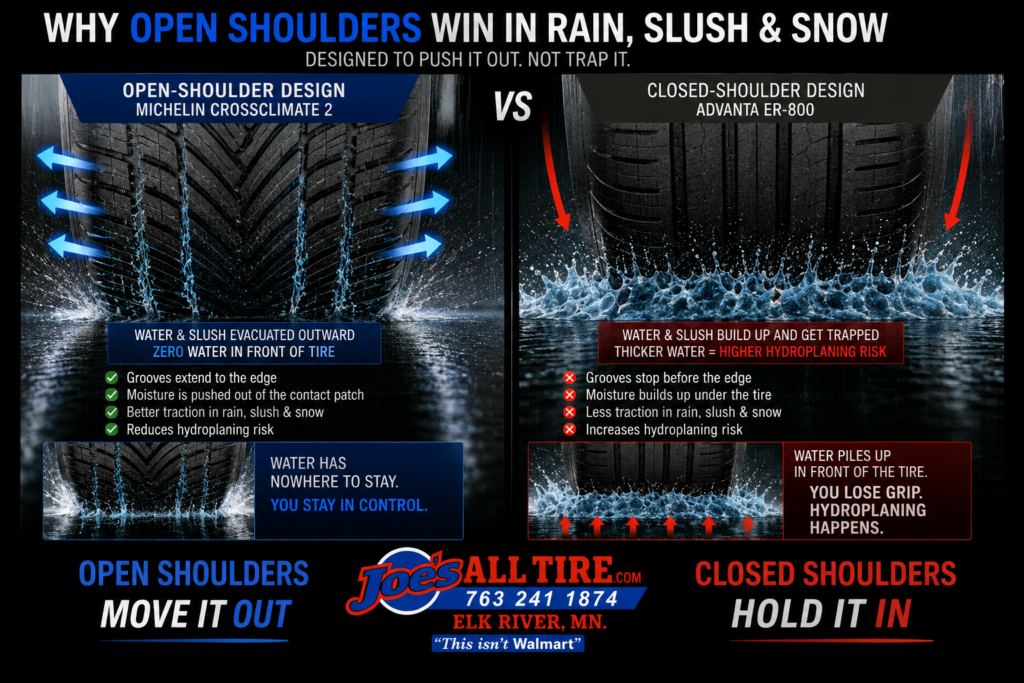
A tire can have plenty of tread left and still make a Minnesota drive feel less secure than it should. If rainwater hangs in the grooves, slush packs into the edges, or the vehicle feels vague on a wet curve, tread design may be part of the problem. Open shoulder traction is one of the features we look for when helping drivers choose tires that can handle the changing conditions around Elk River.
At ALL TIRE, we don’t recommend tires based on a flashy label or a one-size-fits-all answer. The right tread depends on what you drive, where you drive, how much highway time you put in, and whether your vehicle sees snow-covered roads, gravel, job sites, or boat ramps. For many cars, SUVs, and light trucks, an open-shoulder design offers a meaningful advantage when the pavement is wet, slushy, or loose.
What Open Shoulder Traction Means
The shoulder is the outer edge of a tire’s tread, where the tread meets the sidewall. An open-shoulder tire has wider channels, spaces, or gaps near that outer edge. Those openings give water, slush, snow, and loose material a place to move instead of trapping it beneath the tire.
That matters because traction isn’t only about how much rubber touches the road. The tire also needs to clear whatever is sitting between the rubber and pavement. On wet roads, open shoulder channels help move water outward. In snow and slush, they help the tread shed material so the tire can keep finding a usable surface.
Think of it like the grooves around a floor drain. If those paths are blocked or too shallow, water has nowhere to go. A tire faces the same challenge at speed. When it can’t evacuate water fast enough, steering response and braking confidence can drop quickly.
Why It Works Well in Minnesota
Minnesota roads demand more from a tire than a dry-weather rating. One week can bring warm rain, the next can bring freezing temperatures, packed snow, and dirty slush at every intersection. With roughly five months of snow and ice in a typical year, tread design isn’t a small detail.
Open shoulders are especially useful for everyday drivers because they can improve traction in conditions that happen consistantly here:
- Rainwater and standing water during spring and summer storms
- Slush and melting snow in late fall and winter
- Loose snow at the edge of a plowed street or driveway
- Gravel, sand, and dirt on rural roads or worksites
- Muddy conditions around trails, fields, and seasonal properties
For summer rain and winter traction, ALL TIRE strongly recommends considering open shoulder tires for cars and trucks. They aren’t magic, and no tire can defeat black ice or make unsafe speeds safe. But a well-designed open shoulder helps the tire keep clearing its way when road conditions turn messy.
Open Shoulders Are Not Just for Trucks
Many people associate aggressive, open tread patterns with pickup trucks and off-road tires. Light trucks do benefit from them, especially when they’re used for towing, hauling, gravel travel, or getting through unplowed areas. But plenty of all-season and all-weather passenger tires also use open shoulder elements without becoming loud, rough-riding truck tires.
For a commuter car or family SUV, the goal is usually a balanced tread pattern. You want enough open space to move water and slush, while still having a stable center section for predictable highway driving. A tire with an extremely open pattern may be a poor fit for someone who spends nearly all their time on dry pavement and wants the quietest possible ride.
That trade-off is worth understanding. More open tread can mean stronger evacuation and better loose-surface bite, but it may sometimes create more road noise or wear differently than a tighter touring tread. Tire choice should match the vehicle’s real job, not just the weather forecast on the day you buy them.
What to Look at Besides the Shoulder
Open shoulder traction is valuable, but it isn’t the only feature that affects how a tire behaves. The full tread design works as a system. When Joe at ALL TIRE looks at tire options, he’s also considering the grooves running around the tire, the small biting edges called sipes, tread depth, rubber compound, load rating, and speed rating.
For winter driving, a tire’s rubber compound matters because rubber that stays flexible in cold temperatures can grip better than a compound that gets stiff. Sipes add extra edges that can bite into snow and help manage moisture on slick surfaces. Deep circumferential grooves help channel water away at highway speed. Open shoulders give that water and slush another exit path.
The All Season (A/S) Mud+Snow (M&S) marking can indicate that a tire meets a basic mud and snow classification, but it doesn’t automatically mean the tire performs like a dedicated winter tire. If your daily route includes early-morning ice, hills, rural roads, or long winter commutes, it’s worth having an honest conversation about whether an all-season, all-weather, or winter tire makes the most sense.
When an Open-Shoulder Tire May Not Be the Right Answer
There are drivers who need a less aggressive design. A vehicle that stays on dry interstate miles, carries light loads, and is driven mainly in warm weather may prioritize low road noise, long wear, and fuel economy. In that situation, a touring-style tire with a more closed shoulder can be a sensible choice.
Likewise, a heavily open tread isn’t a substitute for proper tire pressure, wheel alignment, or enough remaining tread depth. Even a quality tire can wear unevenly if the alignment is off. If a vehicle shakes at highway speed, pulls to one side, or has worn inner or outer tread edges, the issue may involve balancing, suspension parts, or alignment rather than the tire model alone.
That’s why we start with the vehicle and the problem. Selling a tire that looks tough won’t help if the real issue is a worn wheel bearing, a vibration, or tires that haven’t been rotated often enough.
Choosing Tires Without Guesswork
The tire aisle can make every pattern sound perfect. One tire promises wet grip, another promises mileage, and another is marketed for off-road confidence. Most drivers need a clear answer to a simpler question: will this tire keep my vehicle dependable where I actually drive?
At ALL TIRE, we’ll ask about your vehicle, mileage, commute, trailer use, and winter driving before pointing you toward an option. We can also inspect the tires already on the vehicle to see how they are wearing and whether a rotation, repair, balance, or alignment check should be part of the plan.
If you’re trying to decide whether an open-shoulder tire fits your driving habits, we can sort through the options without the sales pressure. Mobile visitors can tap the blue call button in the lower left corner to ask questions or schedule an appointment.
Price matters, but the lowest upfront price isn’t always the lowest cost over the life of a tire. A poorly matched tire can wear early, ride louder than expected, or leave you wishing for better wet and snow control. This Isn’t Walmart. We focus on quality tires, correct installation, proper balancing, and practical advice that makes sense for your budget.
Keep the Traction You Paid For
Once the right tires are on the vehicle, maintenance protects the performance you chose. Open shoulder channels can’t do their job well if the tread is worn down, underinflated, or unevenly worn. Check tire pressure regularly, especially when temperatures drop. Cold weather lowers pressure, and low pressure can hurt handling, fuel economy, and tread life.
Rotations also matter. Front and rear tires often wear at different rates, particularly on front-wheel-drive vehicles. Regular rotation helps preserve a more even tread pattern and gives the tire its best chance to clear water and slush as designed. If you notice a new vibration, uneven wear, or a TPMS warning, get it checked before a small issue turns into an expensive one.
Frequently Asked Questions
Are open shoulder tires good in snow?
They can be very helpful in snow and slush because the open areas help the tread clear itself and keep biting. For severe winter conditions, the tire’s compound, sipes, and overall winter rating still matter too.
Do open shoulder tires help in heavy rain?
Yes. Open shoulder channels can help move water away from the contact patch, which supports wet-road grip and helps reduce the risk of hydroplaning. Safe speed and adequate tread depth are still essential.
Are open shoulder tires louder?
Some can be louder, especially aggressive all-terrain patterns on trucks. Many modern all-season and all-weather tires use open shoulder features while staying comfortable enough and quiet for daily commuting.
Should I get open shoulder tires for my car or SUV?
It depends on your driving. They’re often a strong option for Minnesota drivers who deal with rain, slush, snow, gravel, or regular rural-road travel. A quieter touring tire may fit better if you mostly drive dry highways.
How can I tell if my current tires are still safe?
Look for low tread, cracks, bulges, uneven shoulder wear, vibration, or poor wet-road confidence. If something feels off, bring the vehicle in for a straightforward inspection. The right tire should make everyday driving feel more controlled, not give you another thing to worry about.
