
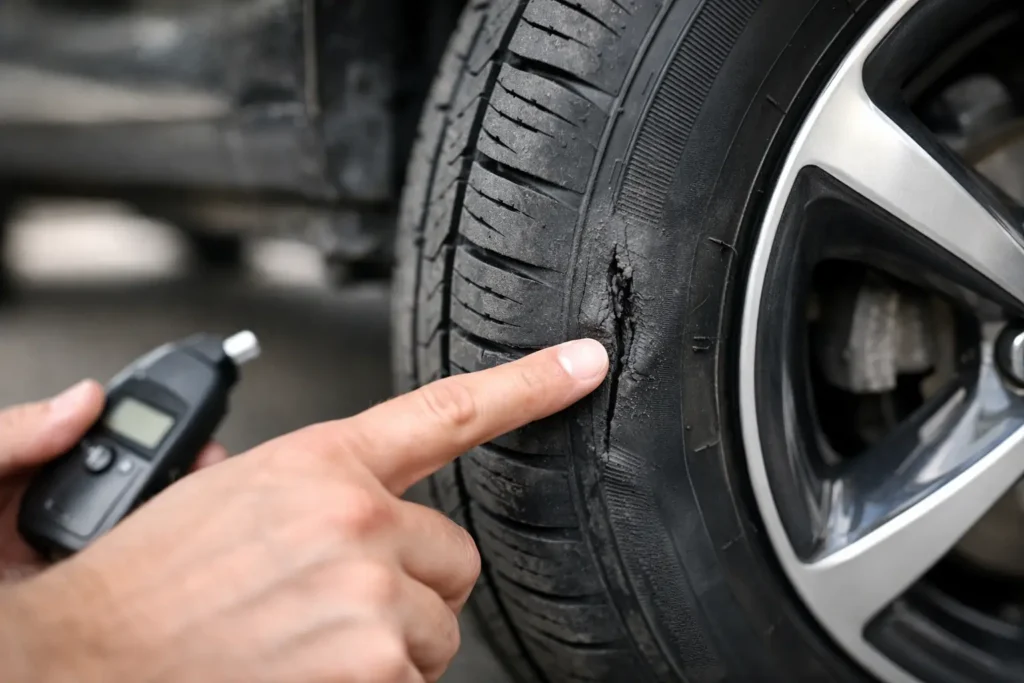
A tire can look “mostly fine” right up until the sidewall tells a different story. That matters more than people realize, because if you’re wondering how to tell tire sidewall damage, you’re usually already looking at the part of the tire that can’t afford to fail.
The sidewall is the flexible section between the tread and the wheel. It handles constant bending, pothole hits, curb contact, and load stress every time you drive. Unlike simple tread wear, sidewall damage can turn serious fast, especially here in Minnesota where potholes, freeze-thaw roads, summer rain, and months of snow and ice all work against your tires.
How to tell tire sidewall damage at a glance
The first thing to know is that not every mark on a sidewall means the tire is ruined. Some are cosmetic. Some mean replace it now. The trick is knowing the difference before you trust that tire at highway speed.
Start by looking for bulges, bubbles, deep cuts, exposed cords, or cracking that goes beyond surface weathering. If the sidewall has a raised lump, that usually means the internal structure has been weakened. If cords are showing, the tire is done. If a cut is deep enough that you can’t confidently call it superficial, it needs a professional inspection.
If you’re staring at a questionable tire and don’t want to guess, that’s the right instinct. Just tap the blue phone call button in the lower left corner – we’re just a call away.
Cosmetic scuffs vs real damage
A lot of drivers notice a scraped sidewall after brushing a curb. In many cases, that’s just a scuff in the outer rubber. It may look ugly, but it doesn’t always mean the tire is unsafe.
What separates a scuff from real damage is depth and distortion. A shallow rub mark with no cracking, no chunk missing, and no bulge is often cosmetic. But if the scrape gouged into the rubber, removed material, or left a flap, that’s different. The same goes for any spot that looks pinched, split, or uneven compared with the rest of the sidewall.
The signs you should not ignore
A bulge or bubble is one of the clearest warning signs. That usually means the cords inside the tire were damaged by impact, often from a pothole or curb. Once the structure is compromised, the tire is living on borrowed time.
Deep cracking is another concern. Fine surface checking on an older tire can happen with age, but wider or deeper cracks suggest the rubber is breaking down. If the cracks run in multiple directions or seem to open up when the tire flexes, replacement is usually the safer call.
Cuts are where people tend to underestimate the risk. A tiny nick may be harmless. A cut that exposes fabric or steel is not. Even without exposed cords, a sidewall cut can weaken the tire enough that it shouldn’t stay in service.
Why sidewall damage is more serious than tread damage
The tread area is thicker and built to handle contact with the road. The sidewall is different. It’s designed to flex, carry load, and absorb movement. That flexibility is exactly why damage there is more dangerous.
When a damaged sidewall flexes, the weakened area keeps working under heat and pressure. That’s why sidewall injuries can become blowouts with little warning. It’s also why sidewall repairs are usually not a safe answer. On this kind of problem, proper advice matters more than a quick cheap fix. This isn’t Walmart. If a tire isn’t safe, honest shops should tell you that plainly.
What causes sidewall damage most often
Around Elk River and the surrounding area, potholes are a big one. A hard pothole hit can pinch the tire between the road and the wheel, damaging the inside of the sidewall even when the outside mark seems minor.
Curb strikes are another common cause, especially during tight parking or winter sliding. Underinflation also plays a role. A low tire flexes more than it should, builds more heat, and becomes more vulnerable to cracking and internal damage. Overloading the vehicle or trailer can do the same thing.
Age matters too. Even if a tire still has tread, older rubber gets less resilient over time. Sidewalls harden, dry out, and become more likely to crack. If you’re already seeing weathering and the tire has taken a hit, those risks stack up.
How to inspect a sidewall the right way
You don’t need a full shop setup to do a basic check. Park on level ground, turn the wheel if needed for a better view, and inspect the full sidewall in good light. Look at both the outer and inner sidewall if you can, because damage isn’t always on the easy-to-see side.
Run your eyes slowly around the tire and compare suspicious areas to the rest of the sidewall. A bubble is sometimes easier to feel than see. Cracks often stand out more when the tire is clean. Dirt can hide cuts, so if the tire is muddy, rinse it first.
If the tire recently lost air, pay even closer attention. A sidewall that’s been driven low can be internally damaged without a dramatic outside wound. In that case, the inspection needs more than a quick glance.
When a tire might look okay but still isn’t
This is where DIY inspection has limits. A pothole impact can bruise the internal cords without creating a huge external mark right away. You may notice a new vibration, repeated air loss, or a slight shape change before you spot an obvious bubble.
If your vehicle suddenly starts riding rough after a hit, don’t assume it’s nothing just because the tread looks good. At All Tire, we’ve seen tires that looked passable from ten feet away and were clearly unsafe once they were closely inspected.
Minnesota driving makes sidewall issues more urgent
Our roads are hard on tires. Between winter freeze-thaw cycles, hidden potholes, slush, sharp road edges, and heavy summer rain, sidewalls take a beating here. That’s one reason tire choice matters so much.
For many cars and trucks in Minnesota, we strongly recommend open shoulder tire designs. They do a better job clearing water in summer and help with traction in snow and slush during the long cold season. Tire design won’t make sidewall damage harmless, but the right tire for local conditions can help reduce the abuse your tires take day to day. If you want more plain-English tire advice, Joe’s All Tire has more seasonal tire information in the knowledge center at www.joesalltire.com/knowledge-center/.
What to do after you hit a pothole or curb
First, don’t keep driving for days hoping it’ll sort itself out. Check tire pressure, look for a bubble or cut, and pay attention to any pull, shake, or thumping. If the steering wheel is off-center or the ride changes, the wheel or alignment may also need attention.
If you don’t see obvious damage, that doesn’t automatically clear the tire. Some impact damage shows up later. That’s why it’s smart to get it checked sooner rather than later, especially before a highway trip.
Replace or monitor? It depends on the damage
A light cosmetic scuff can often be monitored. A bulge, exposed cords, or a significant cut usually means replace the tire. Cracking falls into the middle where age, depth, and overall tire condition matter.
This is also where honest advice matters. A shop should explain what they’re seeing and why it is or isn’t safe, not just push the most expensive option. Joe’s All Tire is built around that kind of straight answer. Joe’s on-site, the recommendations are direct, and the goal is to get it done right the first time.
If replacement does make sense, it’s also worth looking at the bigger picture. If the remaining tires are worn unevenly, old, or not well matched for Minnesota weather, replacing one damaged tire may solve today’s problem but not next month’s. That’s part of why we talk through options instead of treating every tire issue like a one-size-fits-all sale.
A good rule of thumb for sidewall safety
If the sidewall is bulging, cut deep, badly cracked, or showing cords, don’t trust it. If you’re not sure whether what you’re seeing is cosmetic or structural, don’t gamble on it. Tires fail at the worst times – loaded down, at speed, in rain, or when the road’s already slick.
A careful inspection now is a lot cheaper than body damage, downtime, or putting your family on an unsafe tire. When something looks off, trust that instinct and get a real answer before the next trip across town turns into a bigger problem.