

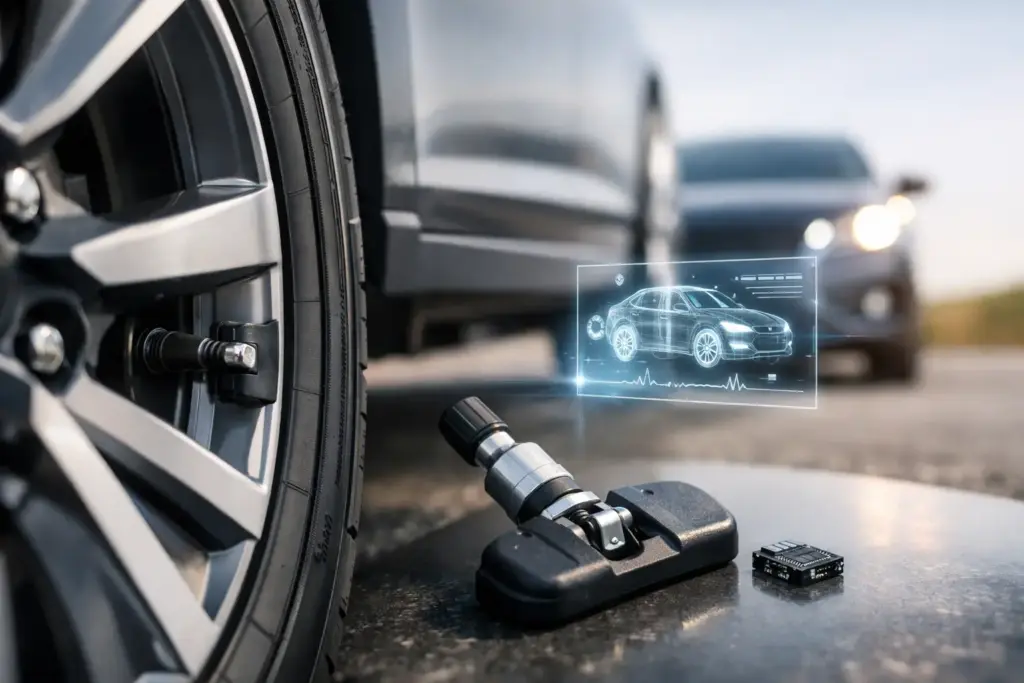
A TPMS warning light on a cold Minnesota morning can mean anything from a normal pressure drop to a slow leak that needs attention. The future of TPMS sensor technology should make that warning more useful, more accurate, and less frustrating for drivers. But the sensor still can’t replace a proper tire inspection, a pressure check, or honest advice from someone who knows what they’re looking at.
For families, commuters, and truck owners around Elk River, the real value of better TPMS technology isn’t another dashboard feature. It’s catching a tire problem early enough to protect the tire, avoid an unexpected roadside stop, and keep the vehicle handling the way it should in rain, slush, snow, and heat.
What the Future of TPMS Sensor Technology May Look Like
Most newer vehicles use direct TPMS sensors, which sit inside each wheel and report tire pressure to the vehicle. They’re already a major safety improvement over waiting until a tire visibly looks low. The next generation will likely provide more detailed information, communicate more reliably with the vehicle, and make sensor replacement less complicated when tires are serviced.
That doesn’t mean every new feature will matter equally to every driver. A person who takes short trips around town may mostly benefit from accurate low-pressure alerts. Someone who tows a trailer, drives a pickup year-round, or runs long highway miles may benefit more from tire temperature readings, faster alerts, and better load-related information.
More useful pressure and temperature data
Future sensors are expected to get better at measuring and reporting pressure changes over time. Instead of only turning on a light after pressure has dropped far enough, some systems may help identify a gradual leak before it becomes a major problem. Tire temperature monitoring may become more common, too, especially on trucks, trailers, and vehicles that carry heavier loads.
Temperature data has limits. A hot tire isn’t automatically a bad tire, because road temperature, vehicle load, speed, and weather all affect it. Still, an unusual temperature difference between tires can give a technician another clue when diagnosing a dragging brake, overloaded tire, bearing issue, or underinflation problem.
Longer-lasting batteries and easier replacement
TPMS sensors have sealed batteries. When that battery reaches the end of its life, the sensor is typically replaced rather than repaired. Depending on the vehicle, driving habits, and sensor quality, many last roughly five to 10 years.
Battery life is one area where sensor technology should improve, but there’s a trade-off. More frequent data transmissions and additional features use more power. Engineers have to balance detailed reporting with a sensor that lasts long enough to be practical. That’s why a simple, dependable sensor is often a better choice than a feature-packed option that creates new service headaches.
At Joe’s ALL TIRE, we look at the full situation when a tire is off the wheel. If one older sensor has failed and the others are near the same age, it may make sense to discuss the condition of all four. That’s not about selling parts you don’t need. It’s about helping you avoid paying for the same mounting, balancing, and diagnostic work again a few months later.
Smarter vehicle communication
One challenge with TPMS service is that sensors, scan tools, and vehicle programming procedures don’t all work the same way. Some vehicles relearn sensors automatically after a drive. Others need a specific relearn process. As vehicles become more connected, communication between the wheel sensor, vehicle computer, and service equipment should become more standardized.
That could reduce false warnings and make tire changes more efficient. It may also help shops confirm exactly which sensor is weak, inactive, or reporting inaccurate information before taking the tire apart. The goal is simple: diagnose the actual problem first, then fix it correctly.
Better Sensors Still Need Good Tires and Regular Checks
A TPMS sensor measures air pressure. It doesn’t measure tread depth, sidewall damage, tire age, loose wheel hardware, or whether a tire is the right fit for your driving. It also can’t tell you whether your tires have enough traction for the roads you drive every day.
That matters here. Minnesota gets months of snow, ice, standing water, and changing temperatures. For cars and trucks, ALL TIRE strongly recommends open shoulder tire designs when they fit the vehicle and driver’s needs. Those open channels help move water, slush, and snow away from the tread, improving traction during summer rain and winter conditions.
Proper inflation helps those tread features work as intended. An underinflated tire can run hotter, wear more on the edges, feel less responsive, and lose some of its ability to clear water. An overinflated tire can wear more through the center and may reduce the tire’s contact patch. The TPMS light is a warning system, not a reason to skip checking pressures with a quality gauge.
Why Sensor Service Requires Care
TPMS sensors are mounted at the valve stem area inside the wheel, where they can be damaged during tire removal or installation if the work isn’t done carefully. The valve stem components, seals, and sensor body all need to be handled correctly. After service, the wheel should be balanced properly and the sensor should be tested and relearned when the vehicle requires it.
The cheapest replacement sensor isn’t always the value choice. A poorly made or incorrectly programmed sensor can create repeat warning lights, inaccurate readings, or another visit back to the shop. This Isn’t Walmart – tire and sensor work should be priced fairly, but it also needs to be done with the right equipment, the right procedure, and accountability if something isn’t right.
If your TPMS light has come on, don’t assume it’s only cold weather. A quick pressure check can tell us a lot, and a diagnostic test can narrow down whether you’re dealing with a leak, a failed sensor, or a vehicle communication issue. If you’re deciding whether to repair one sensor or replace several during tire service, mobile visitors can tap the blue call button in the lower left corner to ask questions or schedule an appointment.
What Drivers Should Expect Next
Over the next several years, TPMS will likely become one part of a larger vehicle safety picture. Vehicles may combine tire pressure information with traction control data, temperature trends, load estimates, and service reminders. Electric vehicles may push the technology further because tire pressure affects range, tire wear, and the extra weight those vehicles often carry.
Still, the basics won’t change. Check tire pressure when the tires are cold. Pay attention to warning lights. Have slow leaks inspected before they become flats. Rotate tires on schedule, and don’t wait for a vibration, pull, or uneven wear pattern to get worse.
The best technology gives drivers an earlier heads-up. Skilled hands and straightforward service are what turn that heads-up into a safe repair.
Frequently Asked Questions
Can I drive with the TPMS warning light on?
You can sometimes drive a short distance after checking that the tire isn’t visibly low, but don’t ignore the light. Check all four tire pressures as soon as possible. If a tire is very low, losing air quickly, damaged, or affecting how the vehicle handles, stop driving and have it inspected.
Does cold weather make the TPMS light come on?
Yes. Tire pressure commonly drops as outside temperatures fall, which is why warning lights often appear during Minnesota cold snaps. Add air to the pressure listed on the driver’s door-jamb label, not the maximum pressure printed on the tire sidewall. If the light returns, there may be a leak or sensor issue.
How long do TPMS sensors usually last?
Most direct TPMS sensors last about five to 10 years, though actual life varies. Their internal batteries eventually wear out. Corrosion, valve stem damage, road conditions, and previous tire service can also affect sensor life.
Do I need to replace all four TPMS sensors at once?
Not always. If one sensor fails on a newer vehicle and the others test well, replacing one can be the sensible repair. If the sensors are all original and near the same age, replacing more than one during tire service may save future labor and inconvenience.
Will future TPMS sensors eliminate tire maintenance?
No. They’ll make it easier to spot pressure problems early, but they won’t replace regular inspections, rotations, balancing, or choosing tires that fit your vehicle and Minnesota driving conditions. A warning light is useful; acting on it before a small issue becomes a bigger one is what keeps you moving safely.
