

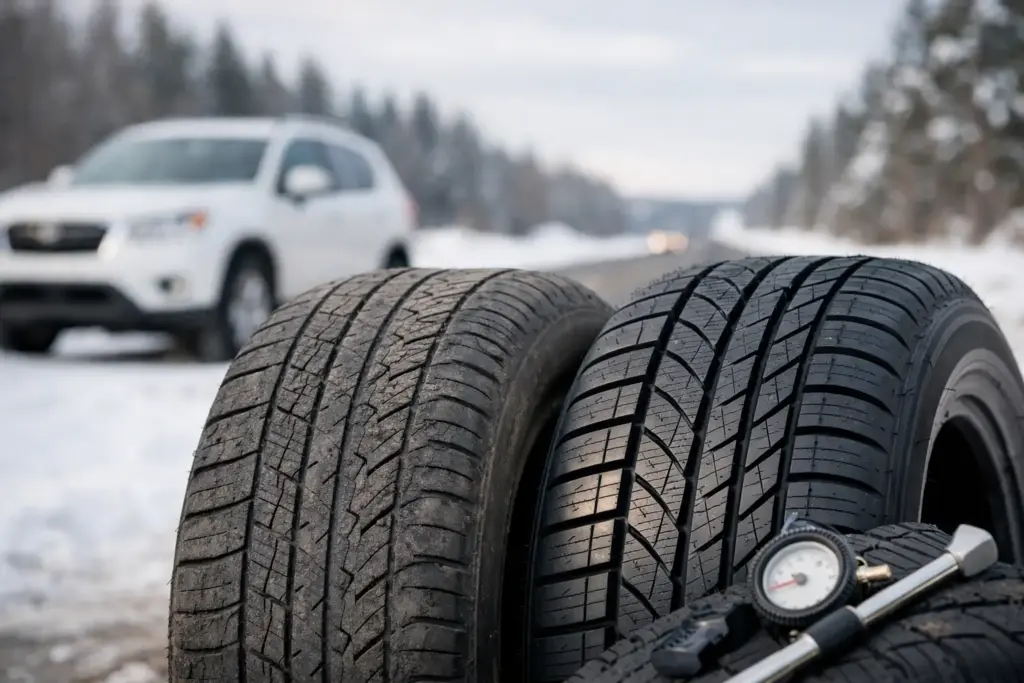
A tire can have plenty of tread left and still be past its safe working life. So, does tire age matter? Absolutely. In Minnesota, where tires deal with summer heat, heavy rain, potholes, and months of snow and ice, the rubber itself matters just as much as the tread you can see.
At Joe’s ALL TIRE, we see this situation often: a driver finds a low-mileage vehicle, trailer, spare tire, or set of tires that looks nearly new at first glance. The tread may be deep, but age can slowly change the tire’s rubber compounds from the inside out. That can affect traction, braking, ride quality, and the tire’s ability to hold together under normal road use.
Why Tire Age Changes How a Tire Performs
Tires aren’t just black rubber rings. They are layered assemblies of rubber compounds, steel belts, fabric, adhesives, and internal materials designed to flex thousands of times per mile. Over time, heat, oxygen, sunlight, moisture, and long periods of sitting cause those materials to break down.
As a tire ages, its rubber can become harder and less flexible. That matters because flexible rubber helps the tread conform to the road. When rubber loses that flexibility, the tire may have less grip in rain, reduced braking control, and a greater chance of cracking or belt separation.
A tire stored indoors in a cool, dry garage will generally age more slowly than one parked outdoors year-round. Still, storage doesn’t stop the clock. A tire that’s old but barely driven isn’t automatically safer than a newer tire that has been driven regularly and maintained well.
For Minnesota drivers, this is especially relevant when roads are wet, slushy, or icy. Harder aged rubber may struggle to grip when you need it most. Tread depth is still important, but tread alone doesn’t tell the whole story.
How Old Is Too Old for Tires?
There isn’t one magic birthday when every tire becomes unsafe. Tire condition, storage history, driving habits, vehicle type, and manufacturer guidance all play a role. As a practical rule, tires approaching six years old deserve closer inspection, even if they appear to have usable tread remaining. Tires around 10 years old should generally be replaced, regardless of tread depth.
That doesn’t mean every six-year-old tire needs to come off immediately. A well-maintained tire may still be serviceable, while another tire of the same age may show cracking, vibration, or damage that makes replacement the smart call. That’s why an in-person inspection is better than guessing from a date alone.
If you’re deciding whether an older set is worth keeping for another season, ALL TIRE can give you a straight answer based on what we see. Mobile visitors can tap the blue call button in the lower left corner to ask questions or schedule an appointment. We’re just a call away when you need a clear recommendation.
The Date Code Tells the Real Age
Every tire sold for road use has a DOT date code on its sidewall. The final four numbers show the week and year it was made. For example, a tire marked 2322 was manufactured in the 23rd week of 2022.
You may need to look on the inner sidewall because the full date code isn’t always visible from the outside of the vehicle. If you can’t find it, Joe at ALL TIRE can help identify it during an inspection.
The manufacturing date isn’t the same as the date you bought the tire. A tire can sit in a warehouse, on a dealer’s shelf, or on a vehicle that doesn’t get driven much. That is why checking the code is worthwhile when buying a used vehicle, considering used tires, or inspecting a spare.
Signs an Older Tire May Need Replacement
Cracks are the most familiar sign of tire aging. Small cracks can show up around the sidewall, between tread blocks, or near the bead area where the tire seals to the wheel. Some cracking is obvious, but early deterioration can be subtle.
Pay attention if you notice any of these issues:
- Sidewall cracking, dry rot, or cracks between tread blocks
- A new vibration, thumping sound, or rougher ride
- Bulges, bubbles, or uneven areas in the sidewall
- Repeated air loss without an obvious puncture
- Tread separation, lifted tread edges, or visible belt concerns
- Tires that feel stiff, slick, or unpredictable in wet conditions
A vibration isn’t always caused by tire age. It can come from a wheel balance issue, bent wheel, worn suspension component, wheel bearing problem, or uneven tire wear. But older tires deserve attention when vibration starts, particularly if the vehicle has been sitting for months.
Why Older Tires Can Be Riskier in Rain and Snow
Deep tread channels water away from the contact patch, but the rubber compound has to do its job too. If the rubber is aged and hardened, it may not bite into wet pavement as effectively. That can make a vehicle feel less settled during hard braking or when turning on slick roads.
For cars and trucks in Elk River and surrounding communities, tire design matters alongside tire age. ALL TIRE strongly recommends open shoulder tire designs whenever they fit the vehicle and driving needs. Open shoulders help move water and slush away from the tread, improving wet-weather performance in summer and traction through Minnesota’s long snow and ice season.
An open shoulder design isn’t a substitute for good tread depth or a fresh tire. It is part of a better overall setup: the right tire for the vehicle, enough tread, correct inflation, proper balance, and a condition check before the weather turns.
The Spare Tire Is Easy to Forget
Spare tires can be some of the oldest tires on a vehicle. They may have never touched the road, but they still age in the trunk, under the vehicle, or mounted on the back of an SUV or trailer. Heat, cold, and exposure can take a toll even when the spare has full tread.
Check the spare’s date code and air pressure at least a couple of times a year. If you need it during a roadside emergency, you don’t want to discover it is cracked, flat, or too old to trust. This is particularly important for trailer owners, since trailers often sit for long stretches between uses.
Don’t Judge Tires by Price Alone
A low price can be tempting when a vehicle needs tires now, but an older tire with deep tread is not always a good value. The same goes for a bargain tire that isn’t built for the way you drive. This Isn’t Walmart. At ALL TIRE, the goal is to help you spend wisely on tires that fit your vehicle, budget, and Minnesota driving conditions, not simply move whatever happens to be available.
Sometimes a quality used tire in the correct size is a reasonable short-term solution, especially for an emergency replacement. Other times, replacing a pair or full set is the safer choice because the remaining tires are aging, worn unevenly, or no longer suited to the season. Honest advice means explaining that difference before the work begins.
Make Tire Age Part of Regular Maintenance
You don’t need to inspect date codes every week. A quick check at rotations, seasonal tire changes, brake service, or before a long road trip is usually enough to catch concerns early. Keeping tires properly inflated also helps reduce heat buildup and uneven wear, both of which can shorten tire life.
If your tires are several years old, don’t wait for a blowout or a major handling problem to get them checked. A proper inspection can look at tread, cracking, uneven wear, inflation, balance concerns, and whether the tires still make sense for the way you use your vehicle.
Frequently Asked Questions
Does tire age matter if the tread is still deep?
Yes. Deep tread doesn’t prevent rubber from aging. A tire can look good from a distance while its rubber compounds, internal structure, or sidewalls are deteriorating.
How can I tell how old my tires are?
Find the DOT code on the sidewall. The final four digits show the manufacturing week and year. For example, 1521 means the 15th week of 2021.
Should I replace tires after six years?
Not automatically, but six years is a good point for more careful inspections. Condition, storage, wear, and manufacturer recommendations all matter. Tires nearing 10 years old should generally be replaced.
Can old tires cause vibration?
They can, especially if a tire has developed internal damage, flat spotting, separation, or uneven wear. Since vibration has several possible causes, it’s worth having it diagnosed instead of assuming it only needs balancing.
Are older tires worse in Minnesota winter weather?
They can be. Aged, hardened rubber may have less grip on cold, wet, slushy, and icy roads. If you’re unsure whether your tires are ready for another Minnesota season, a quick inspection now can help you make a safer decision before the weather makes it urgent.
