

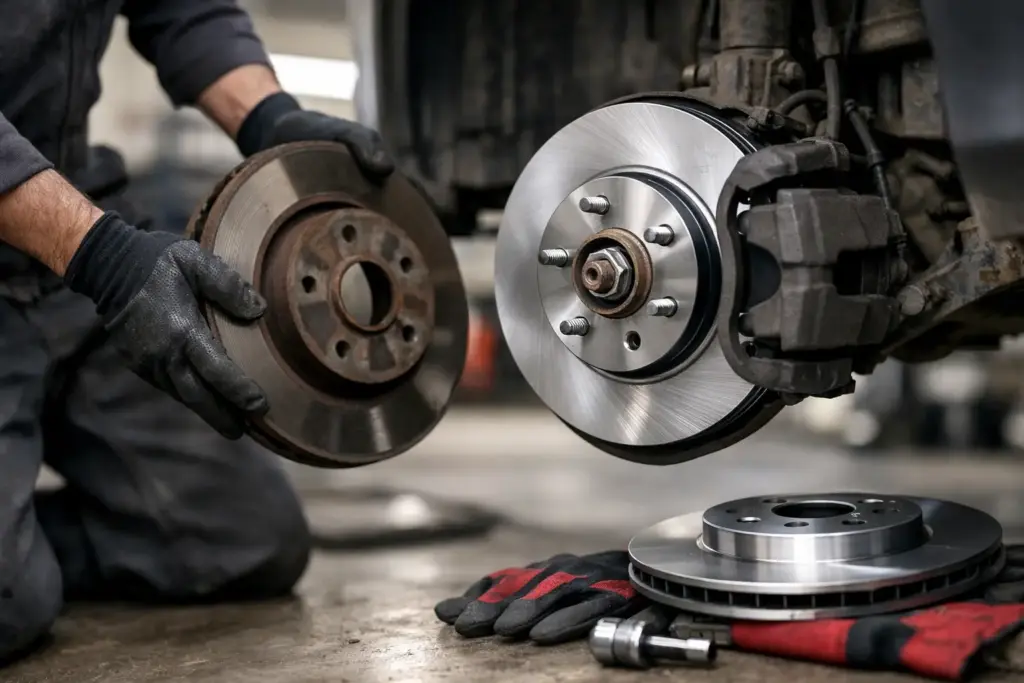
A brake pedal that shakes at a stoplight, a scraping sound near the school pickup line, or a vehicle that pulls when braking isn’t something to put off. This brake rotor replacement guide explains what those signs can mean, when rotors truly need replacement, and why the repair has to be done as a complete brake-system job rather than a quick parts swap.
At Joe’s ALL TIRE, locals often call us ALL TIRE because they know they can talk directly with someone who works on the vehicles every day. We don’t make brake recommendations based on a sales target. We inspect the condition of the pads, rotors, calipers, hardware, brake fluid, and related components so you know what needs attention now and what can wait.
If your brakes are making noise or your steering wheel shakes when you slow down, getting a straight answer is the right next step. Mobile visitors can tap the blue call button in the lower left corner to ask questions or schedule an appointment.
What Brake Rotors Do
Brake rotors are the flat metal discs behind your wheels. When you press the brake pedal, hydraulic pressure pushes the brake pads against the rotors. That friction slows the wheel and brings the vehicle to a stop.
Rotors deal with intense heat, moisture, road salt, and thousands of heat-up and cool-down cycles. Here in Minnesota, winter road treatment and slushy driving can speed up rust around the rotor edges, vents, and hub surface. A little surface rust after a rainy night is normal. Rust that causes flaking, uneven contact, or a weakened braking surface isn’t.
Because pads and rotors work together, replacing only one worn part can create problems. New pads installed against badly grooved, overheated, or uneven rotors may be noisy, wear unevenly, and fail to deliver the smooth stopping feel you expect.
Signs Your Rotors May Need Attention
Not every brake noise means you need rotors, and not every worn rotor makes noise. That’s why an inspection matters. Still, there are several symptoms worth taking seriously:
- A pulsing brake pedal when slowing down, especially from highway speed
- Steering-wheel vibration during braking, usually more noticeable with front brake issues
- Grinding, scraping, or metal-on-metal noises
- Deep grooves, rough rust buildup, or a visible lip around the rotor edge
- A vehicle that pulls to one side when braking
- Longer stopping distances or a brake pedal that feels different than usual
Pedal pulsation is commonly blamed on “warped rotors,” but the real issue is often uneven rotor thickness or friction material transferred unevenly to the rotor surface. The practical answer is the same: measure and inspect the parts before deciding whether machining or replacement makes sense.
A pull can also come from a sticking caliper, seized slide pins, a brake hose issue, tire condition, or suspension wear. Replacing rotors without checking the cause can leave you with the same complaint and another bill later.
When Replacement Is Better Than Resurfacing
Some rotors can be resurfaced, also called machining, when there is enough usable metal left and the rotor is otherwise sound. The shop removes a small amount of material to restore a clean, even surface. But machining isn’t automatically the smart choice.
Every rotor has a minimum thickness specification set by the vehicle manufacturer. If machining would bring it too close to that limit, replacement is usually the safer value. Thin rotors don’t handle heat as well, can become noisy, and may wear out sooner. Severe corrosion, cracking, heat spotting, deep scoring, or damaged cooling vanes also point toward replacement.
Modern rotors are often made with less extra material than they had years ago. On many vehicles, replacing rotors and pads together is more sensible than paying to machine rotors that may have limited life remaining. It depends on the vehicle, the rotor measurements, driving habits, and the actual condition of the parts – not a one-size-fits-all rule.
Why Pads and Rotors Are Often Replaced Together
A good brake job starts with the entire friction surface. Fresh pads need a smooth, properly prepared rotor face so they can bed in evenly. Reusing a worn or uneven rotor with new pads can lead to vibration, noise, reduced pad life, and inconsistent braking.
During a proper rotor replacement, the technician should also inspect the caliper slides, mounting bracket, pad hardware, brake hoses, wheel bearings, and wheel hub surface. Rust or debris between the hub and rotor can keep the new rotor from sitting flat. That tiny amount of runout can turn into pedal pulsation later, even with brand-new parts.
This is where workmanship matters. Brake repairs aren’t the place for rushed shortcuts or the cheapest possible components. This Isn’t Walmart. Your vehicle needs parts that fit correctly, surfaces cleaned and prepared correctly, fasteners tightened to specification, and a road test when appropriate.
What a Proper Brake Rotor Replacement Looks Like
The job should be methodical, not mysterious. At ALL TIRE, the goal is to identify the reason for the wear before installing parts. That may include checking rotor thickness and runout, pad wear patterns, caliper movement, brake hardware, and the condition of the fluid and lines.
A quality repair generally includes these steps:
- Confirm the customer’s concern with an inspection and, when needed, a road test
- Measure the rotors and examine the pads for uneven wear, cracking, glazing, or contamination
- Inspect caliper operation, slide pins, hardware, hoses, and the wheel hub mounting surface
- Replace worn pads and rotors with parts suited to the vehicle and its use
- Clean and lubricate approved contact points, then torque wheels correctly
- Verify brake operation before the vehicle leaves the shop
The exact procedure can vary. A pickup that tows, a commuter vehicle that sees stop-and-go traffic, and a trailer have different brake demands. What shouldn’t vary is careful measuring and honest communication about what was found.
How Long Do Brake Rotors Last?
There isn’t a reliable mileage number for every driver. Rotors may last through multiple sets of brake pads, or they may need replacement sooner because of corrosion, aggressive driving, heavy loads, repeated hard stops, or a sticking caliper.
For Minnesota drivers, winter matters. Salt and moisture can corrode rotor surfaces and hardware even if the vehicle doesn’t rack up many miles. Short trips can contribute, too, because the brakes may not heat up enough to dry off fully. If your vehicle sits for long stretches, surface corrosion can become more than cosmetic.
Pay attention after tire rotations, seasonal wheel changes, or any work that involves removing the wheels. That’s a good time to catch uneven pad wear, seized hardware, or rust concerns before they become a bigger repair.
Don’t Ignore the Related Problems
Brake vibration isn’t always a rotor problem. Tire imbalance, bent wheels, worn suspension components, loose wheel bearings, and uneven tire wear can create similar symptoms, especially at speed. The difference is often when the vibration happens. A shake that appears only when braking points more strongly toward the brake system. A vibration that continues while cruising may need a tire, wheel, bearing, or suspension diagnosis.
That distinction saves money. Throwing parts at a symptom is frustrating, and it isn’t how a local shop earns trust. A clear inspection gives you the facts first, then lets you decide how to move forward.
Frequently Asked Questions
Can I replace brake rotors without replacing brake pads?
You can in some situations, but it usually isn’t recommended if the existing pads have meaningful wear or an uneven contact surface. New rotors and compatible new pads generally provide the most consistent result.
How do I know if my brake rotors are bad?
Pedal pulsation, steering-wheel shake during braking, grinding noises, deep grooves, heavy corrosion, and rotor measurements below specification are common indicators. An inspection confirms the cause.
Is it safe to drive with warped or uneven rotors?
If you feel pulsation or vibration, schedule an inspection soon. Brakes may still stop the vehicle, but the issue can worsen and may hide another problem such as a sticking caliper or improper rotor mounting.
Why does my vehicle shake only when I brake?
That pattern often points to uneven rotor thickness or another brake-related issue. If it shakes while cruising too, tires, wheels, bearings, or suspension parts may also need inspection.
How much does brake rotor replacement cost?
Cost depends on the vehicle, axle, rotor and pad choice, corrosion level, and whether calipers or hardware need service. The useful number comes after someone has measured the parts and identified the actual cause.
When your brakes don’t feel right, trust the feeling and get them checked before a small vibration becomes a larger repair. A careful inspection and a job done right can make every stop feel calmer, smoother, and safer.
